Author: williamwhite

  • Encrypt and Share Files Like a Pro: Your Complete Guide

    Encrypt and Share Files Like a Pro: Your Complete Guide

    Why Your Files Need Bulletproof Protection Right Now

    In our interconnected world, data breaches are a constant threat. Cybercriminals are using increasingly sophisticated tactics to target vulnerable data. This means encrypting and sharing files is no longer optional, but a necessity for both individuals and businesses. The repercussions of a data breach go far beyond financial losses, impacting reputation, business operations, and even legal compliance.

    The Real Cost of Data Breaches

    The true cost of a data breach is complex. The financial implications are significant, including recovery expenses, legal fees, and potential fines. However, the damage to an organization's reputation can be even more severe. Lost customer trust and brand erosion can have long-lasting consequences. Operational disruptions from a breach can also cause substantial productivity losses and hinder growth.

    The Rise of Encryption as a Necessity

    The demand for file encryption software is rapidly increasing. In 2023, the global market was valued at USD 3.7 billion. Projections show it reaching USD 11.6 billion by 2033, growing at a CAGR of 12.1% between 2025 and 2033. This growth reflects the increasing awareness of encryption's vital role in protecting sensitive data. Learn more about the growing market for file encryption software here. Furthermore, regulatory bodies are increasingly requiring encryption across various industries, highlighting its importance for data security.

    Emerging Threats and the Need for Advanced Protection

    Traditional security measures are often not enough to defend against today's advanced cyber threats. New technologies, such as AI-powered attacks, present challenges that demand sophisticated security solutions. Encryption serves as a vital defense, protecting sensitive data even if other security measures fail. It's like a digital vault, safeguarding your valuable information. This strong protection is essential in a world of ever-evolving threats.

    Encryption: Your First Line of Defense

    Encrypting and sharing files offers essential protection against data breaches. By converting sensitive data into an unreadable format, encryption ensures that even if a breach occurs, the information remains inaccessible to unauthorized parties. This proactive security approach minimizes potential damage and disruption from cyberattacks. Encryption is a fundamental part of a comprehensive security strategy.

    Encryption Basics That Actually Make Sense
    Encryption Analogy

    Protecting your files begins with a solid understanding of encryption. Imagine sending information two ways: on a postcard, open for anyone to read, or in a sealed envelope, protected from prying eyes. Encryption effectively transforms your data from that exposed postcard into a secure, sealed letter, rendering it unreadable without the proper key.

    Symmetric vs. Asymmetric Encryption: Two Different Approaches

    There are two primary types of encryption: symmetric and asymmetric. Symmetric encryption uses a single key for both encryption and decryption, much like using the same key to lock and unlock a door. This method is generally faster and more efficient, making it well-suited for securing large files. Asymmetric encryption, however, uses two separate keys: a public key for encryption and a private key for decryption. Think of this like a mailbox: anyone can drop a letter in (encrypt with the public key), but only the mailbox owner has the key to retrieve the contents (decrypt with the private key). For a deeper dive into email encryption, check out this resource: How to master HIPAA compliant email encryption.

    AES-256 Encryption: The Industry Standard

    The current gold standard for file encryption is AES-256, or Advanced Encryption Standard with a 256-bit key. Its robust security stems from the sheer number of possible key combinations. The odds of cracking AES-256 are astronomically small – comparable to finding a single, specific grain of sand among all the beaches on Earth. This makes it a highly secure choice for protecting sensitive information.

    Encryption Keys: Safeguarding Your Data

    Encryption keys are the digital codes that lock and unlock your encrypted data. Key length is directly related to security: the longer the key, the stronger the protection. 256-bit keys, like those used in AES-256, offer exceptionally high levels of security. Remember, losing your encryption key is akin to losing the key to a safe – your encrypted data will become inaccessible. Safeguarding your keys is paramount to maintaining data security.

    Choosing the Right Encryption Method

    The best encryption method for your needs depends on your specific situation. Symmetric encryption's speed makes it a practical choice for sharing files within a controlled environment, like within a company. Asymmetric encryption offers stronger security for sharing information with external parties, ensuring that only the intended recipient can decrypt the data. Understanding these differences allows you to make informed decisions about protecting your files during sharing and storage. Choosing wisely empowers you to establish the right level of security for your individual circumstances.

    Finding Your Perfect Encryption Toolkit

    Navigating the world of encryption tools can feel overwhelming. From simple file protection to complex enterprise solutions, how do you choose the right tools to encrypt and share files securely? This section provides clarity, helping you find the perfect encryption toolkit for your individual needs.

    Evaluating Your Needs and Resources

    Before exploring specific tools, assess your requirements. What types of files will you encrypt? How sensitive is the data? Who will you be sharing these files with? Your budget and technical expertise also factor into the decision. A user-friendly application might suffice for a small business owner. However, a large enterprise handling sensitive data will require a more robust, enterprise-grade platform.

    Built-In vs. Third-Party Tools

    Most operating systems offer basic encryption features like BitLocker for Windows and FileVault for macOS. These are suitable starting points for local file protection. However, they often lack the advanced features of dedicated third-party tools. Third-party solutions offer features like secure file sharing, granular access controls, and stronger encryption algorithms. These additions make them an attractive option for enhanced security and sharing capabilities.

    Free vs. Premium: Balancing Cost and Features

    Several free encryption tools provide surprisingly robust security, rivaling premium solutions in encryption strength. However, free tools may lack features like secure file sharing, technical support, or advanced access controls. Premium tools frequently include these crucial additions, representing a valuable investment for organizations prioritizing comprehensive security. The choice between free and premium depends on your specific needs and budget.

    Cloud-Based vs. Local Encryption: Weighing the Trade-Offs

    Cloud-based encryption offers the convenience of accessing your files from anywhere. However, it introduces a potential vulnerability: your data resides on third-party servers. Local encryption, where files are encrypted and stored on your own devices, gives you greater control but limits accessibility. Understanding these trade-offs is crucial for selecting the best encryption approach.

    Choosing the Right Algorithm: AES vs. PGP
    Infographic about encrypt and share files

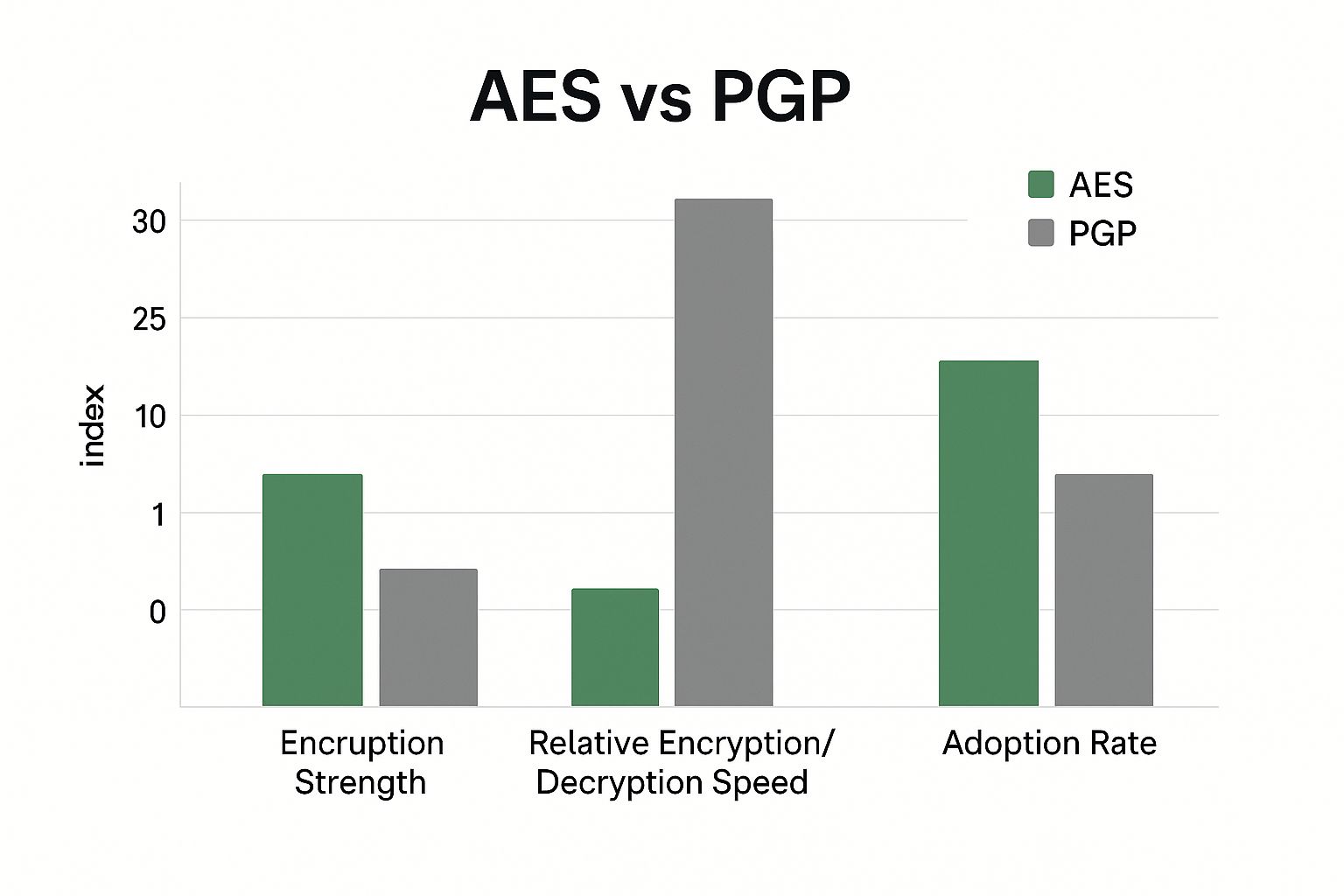
    The infographic above compares AES and PGP encryption algorithms. AES generally provides a good balance of speed and security, leading to wider adoption. PGP, although strong, can be slower. This difference makes AES suitable for most general uses, while PGP might be preferred for situations demanding maximum security where speed is less critical.

    To help you choose the right tool, let's compare some popular encryption solutions:

    The following table provides a head-to-head comparison of leading encryption solutions, highlighting their key features, supported platforms, encryption standards used, and pricing structures. This information will allow you to evaluate the available options and select the best fit for your specific encryption needs.

    Top Encryption Tools: Features and Performance

    Tool Name Encryption Standard Platform Support Key Features Price Range
    VeraCrypt AES, Serpent, Twofish Windows, macOS, Linux Full-disk encryption, file container creation Free
    BitLocker AES Windows Full-disk encryption, device encryption Included with Windows Pro/Enterprise
    FileVault XTS-AES-128 macOS Full-disk encryption Included with macOS
    AxCrypt AES-256 Windows, macOS, iOS, Android File encryption, cloud storage integration Free/Premium
    7-Zip AES-256 Windows, Linux, macOS File compression and encryption Free

    As you can see, different tools offer various levels of security, features, and platform compatibility. Consider your needs and resources when making your choice.

    Implementation and Ongoing Management

    Implementing encryption might seem daunting, but it doesn't have to be. Start small, encrypting a subset of your most sensitive data. Gradually expand your efforts as you gain confidence. Ongoing management is vital. Regularly update your software, back up your encryption keys, and train your team on best practices.

    Sharing Encrypted Files Without the Headaches
    Sharing Encrypted Files

    Encrypting files is essential, but sharing them securely can be tricky. This section explores the challenges of sharing encrypted files and offers practical solutions for various situations.

    Key Management: The Cornerstone of Secure Sharing

    A solid key management strategy is fundamental to secure file sharing. Your encryption key is like the combination to a safe. Sharing it directly compromises security. Asymmetric encryption offers a better approach. Encrypting a file with the recipient's public key ensures only their private key can decrypt it.

    Secure Password Distribution: Avoiding Common Pitfalls

    Even with asymmetric encryption, you might need to share passwords for encrypted archives. Sending these through regular email or messaging apps is risky. For more secure email practices, check out this guide: How to Send Email Securely: Your Complete Protection Guide. Using a secure password manager like LastPass or a dedicated secure messaging platform with end-to-end encryption, such as Signal, adds an extra layer of protection.

    Collaboration and Access Control: Streamlining Secure Workflows

    Team file sharing requires clear protocols. Establish a standard encryption method and key management system. Access controls are crucial for managing who can view, edit, or download files. Cloud storage services often provide features for controlling shared file permissions, ensuring only authorized team members access specific documents. For example, a shared encrypted folder with tiered permissions can manage access effectively.

    Troubleshooting Common Sharing Scenarios: Maintaining Control

    Problems like lost private keys, forgotten passwords, or software compatibility issues can disrupt sharing. Establish clear procedures for addressing these situations. Key recovery mechanisms, readily available technical support, and up-to-date documentation on encryption and sharing processes are crucial for minimizing disruptions and maintaining data accessibility.

    Balancing Security and Usability: Practical Strategies for Success

    Security shouldn't come at the cost of usability. If the system is too complex, people won't use it. Choose tools and methods that integrate smoothly into your workflow. Automating tasks like encryption and key management can improve efficiency. Regularly review and adjust your processes to strike the right balance between security and usability, encouraging consistent use and protecting your valuable data.

    Industry Trends Shaping File Encryption's Future

    The file encryption landscape is in constant flux, influenced by emerging technologies and evolving security needs. Understanding these trends is essential for making smart decisions about encrypting and sharing files effectively, both now and for the future.

    The Impact of Remote Work and Cloud Adoption

    The increase in remote work and the adoption of cloud computing have significantly amplified the need for robust file encryption solutions. With data continuously moving across networks and stored on remote servers, ensuring its security through encryption is paramount. This shift has driven demand for user-friendly, cloud-based encryption tools that enable secure access and collaboration from anywhere.

    Evolving Compliance Requirements: A Driving Force

    Regulatory bodies are increasingly requiring stronger data protection measures, including file encryption, across various industries. This trend compels organizations to adopt more robust encryption practices and invest in solutions that comply with these evolving standards. Staying informed about these regulations is crucial for maintaining compliance and avoiding penalties.

    The Role of AI in Encryption

    Artificial intelligence is playing a growing role in shaping the future of file encryption. AI can be used to develop stronger encryption algorithms, automate key management processes, and identify potential vulnerabilities. However, the use of AI in encryption also raises important questions about data privacy and access. Balancing AI's potential with the need to safeguard sensitive information is a key challenge going forward.

    Zero Trust Security and File Sharing

    Zero trust security models, based on the principle of "never trust, always verify," are influencing how organizations approach file sharing. By requiring authentication and authorization for every access attempt, regardless of location or device, zero trust enhances security for shared encrypted files. This approach highlights the importance of strong encryption and robust access controls to minimize data breaches.

    Quantum Computing: A Looming Threat?

    The arrival of quantum computing presents a potential threat to current encryption standards. Quantum computers’ immense processing power could break existing encryption algorithms, potentially exposing encrypted data. This has spurred research into quantum-resistant cryptography, designed to withstand attacks from these powerful machines. This emerging field is critical for ensuring the long-term security of encrypted files.

    Market Growth and Importance

    The encryption software market is experiencing significant growth. In 2024, the market was valued at approximately USD 13.45 billion, and projections suggest it will reach USD 15.29 billion in 2025, representing a CAGR of 13.7%. You can find more detailed statistics here. This growth underscores the increasing importance of encryption in protecting sensitive information.

    Preparing for the Future of Encryption

    Staying ahead of these trends requires constant vigilance. Businesses and individuals must prioritize investing in up-to-date encryption solutions, implementing strong key management practices, and staying informed about emerging threats and technologies. By proactively approaching file encryption, you can protect your valuable data in an increasingly complex digital landscape.

    Advanced Strategies for Specialized Industries
    Specialized Industries and Encryption

    Protecting sensitive data is paramount for every industry. However, sectors like healthcare, finance, legal, and technology face unique data security challenges. These demand advanced encryption and file-sharing solutions that go beyond the basics.

    Healthcare: Protecting Patient Data

    Healthcare organizations manage highly sensitive patient data. Robust encryption is crucial for complying with regulations like the Health Insurance Portability and Accountability Act (HIPAA). This extends beyond encrypting static files. Securely sharing patient information between providers requires stringent access controls and comprehensive audit trails.

    End-to-end encryption for telehealth consultations, for example, ensures confidentiality. Automated key rotation further enhances security. This process regularly changes encryption keys, making it significantly harder for attackers to access data, even if a key is compromised.

    Finance: Securing Transaction Records

    Financial institutions handle massive amounts of sensitive transaction data. Strong encryption is essential to prevent fraud and maintain customer trust. Advanced techniques like time-stamped encryption provide an irrefutable record of data access and encryption times.

    This adds an extra layer of security and accountability for financial transactions. Integrating encryption with existing security infrastructure is also crucial for seamless data protection.

    Legal: Safeguarding Confidential Documents

    Law firms manage confidential client information and legal documents requiring strict confidentiality. Securely encrypting and sharing files is vital for upholding attorney-client privilege. Digital signatures, a critical component of advanced encryption, verify the authenticity and integrity of legal documents, ensuring they remain untampered with during transfer. This protection is essential for legal proceedings and maintaining client trust. The broader data encryption market, encompassing file encryption, is rapidly expanding. In 2024, the market size was approximately USD 18.08 billion. Projections indicate it will reach USD 20.72 billion in 2025, with a CAGR of 14.6%. More detailed statistics are available here.

    Technology: Protecting Intellectual Property

    Technology companies often possess valuable intellectual property, including source code, proprietary algorithms, and product designs. Securely encrypting and sharing these files, both internally and with partners, is crucial for protecting competitive advantages.

    Policy-based encryption rules allow for automatic file encryption based on classification. This ensures sensitive information is always protected. This automated approach simplifies security management and reduces the risk of human error.

    Scaling and Integrating Encryption Solutions

    Scaling encryption across global teams presents significant challenges. Centralized key management systems and robust access controls are essential for maintaining security and control. Integrating encryption with existing security tools and workflows streamlines implementation and minimizes disruptions, ensuring data protection without impacting productivity.

    Lessons Learned from Successful Deployments

    Successful encryption deployments often involve a phased approach. This starts with the most sensitive data and gradually expands coverage. Thorough employee training on encryption best practices is also crucial. Regularly reviewing and updating encryption policies ensures they remain effective against evolving threats. This creates a robust and adaptable security strategy.

    Your Roadmap to Encryption Success

    Successfully encrypting and sharing files requires a well-defined plan. Just as an architect wouldn't begin construction without blueprints, a robust encryption strategy demands a structured approach. This includes outlining clear steps, realistic timelines, and necessary resources.

    Planning Your Encryption Rollout

    The first step involves identifying which files need encryption. Prioritize sensitive data, such as financial records or personal identification documents. Next, determine the appropriate encryption methods and tools based on your specific needs and technical expertise. For further insight, explore the Top Benefits of Encrypted Email You Need to Know. This careful planning forms the foundation of your encryption strategy.

    Implementation and Training

    After selecting your encryption tools, implement them gradually. Begin with a small set of files and users to test the process and identify potential issues. Thorough training for all users is essential. Provide clear instructions and helpful resources to ensure everyone understands how to use the chosen encryption tools effectively.

    Ongoing Maintenance and Improvement

    Encryption is not a one-time task. Ongoing maintenance, such as regular software updates and key backups, is crucial for long-term security. Regularly review your encryption practices and adapt them to emerging threats and evolving needs. This proactive approach, similar to regular car maintenance, prevents major security problems down the line.

    Measuring Encryption Effectiveness

    How can you determine if your encryption strategy is successful? Establish Key Performance Indicators (KPIs) to track its effectiveness. These could include metrics like a reduction in security incidents or an increase in user adoption rates. Monitoring these KPIs provides valuable insights into the success of your encryption efforts.

    To illustrate a typical encryption rollout, let's look at a sample implementation roadmap. The table below outlines the phases, their duration, key activities, success metrics, and common challenges.

    Phase Duration Key Activities Success Metrics Common Challenges
    Assessment 1 Month Identify sensitive data, evaluate current security, choose encryption methods Completion of data inventory, selection of encryption tools Resistance to change, lack of resources
    Implementation 2 Months Deploy encryption tools, configure settings, test functionality Successful encryption of target files, user training completion Technical difficulties, user adoption
    Training 1 Month Conduct user training, provide documentation, establish support channels User proficiency with encryption tools, positive user feedback Lack of engagement, understanding complexities
    Monitoring & Review Ongoing Monitor KPIs, update software, adapt to new threats Improved security posture, reduced security incidents Maintaining user vigilance, staying updated on threats

    This table demonstrates how a phased approach allows for focused efforts and measurable progress at each stage. By tracking success metrics, you can identify areas for improvement and ensure the ongoing effectiveness of your encryption strategy.

    Ready for secure and seamless email communication? Start your free trial with Typewire today!
  • Top Benefits of Encrypted Email You Need to Know

    Top Benefits of Encrypted Email You Need to Know

    Why Encrypted Email Matters in 2025

    Want secure, private email? This list explains six key benefits of encrypted email and why it's crucial for individuals and businesses. Learn how encrypted email enhances data protection, ensures regulatory compliance, safeguards against cyberattacks, protects intellectual property, verifies message integrity, and builds trust. Understanding these benefits of encrypted email will help you make informed decisions about your digital security in 2025.

    1. Enhanced Data Protection and Privacy

    In today's digital landscape, email remains a primary communication channel, carrying sensitive personal, financial, and business information. However, traditional email systems are inherently vulnerable to interception and unauthorized access. This is where encrypted email comes in, offering a crucial first line of defense against prying eyes and malicious actors. Encrypted email provides robust protection by transforming readable text into an uninterpretable coded format, effectively shielding your communications from unauthorized access. This encryption process ensures that your private messages remain confidential, even if intercepted during transmission or while stored on a server. Only the intended recipient, possessing the correct decryption key, can unlock and read the message. This fundamental principle underlies the enhanced data protection and privacy offered by encrypted email, making it a cornerstone of secure communication in the modern age.

    Enhanced Data Protection and Privacy

    Encrypted email leverages sophisticated cryptographic techniques, primarily end-to-end encryption protocols like AES-256 and RSA. These protocols ensure that only the sender and recipient hold the keys to decipher the message. The implementation of a zero-knowledge architecture further strengthens privacy by preventing even the email service provider from accessing the content of your messages. This feature is crucial, as it eliminates a potential point of vulnerability and ensures complete confidentiality. Moreover, modern encrypted email services extend this protection to email attachments and metadata, ensuring a comprehensive security blanket for your communications. Forward secrecy, another important feature, ensures that even if encryption keys are compromised in the future, past messages remain secure, preventing retroactive decryption of your communication history.

    The benefits of encrypted email extend to various real-world scenarios. Healthcare providers utilize it to securely transmit patient records, complying with HIPAA regulations and safeguarding sensitive medical information. Financial institutions rely on it to protect client transaction details, mitigating the risk of financial fraud. Journalists communicating with confidential sources, legal firms exchanging sensitive case information, and businesses protecting intellectual property all benefit from the enhanced security offered by encrypted email. For individuals, encrypted email provides peace of mind, knowing that personal communications remain private and protected from unauthorized access.

    Despite the significant advantages, encrypted email has a few potential drawbacks. Setting up encrypted email and managing encryption keys may require some technical understanding, although many modern services offer user-friendly interfaces to simplify this process. The encryption and decryption process can also add a slight delay to email delivery compared to traditional email. Finally, compatibility issues may arise with older email clients that do not support modern encryption protocols.

    To maximize the benefits of encrypted email, consider these practical tips: Choose email providers with robust encryption standards and a proven track record in security. Regularly update your encryption keys and passwords to enhance protection against potential breaches. Before sending highly sensitive information, verify the recipient's public key to ensure you're communicating with the intended party. Lastly, use strong, unique passwords for your encrypted email accounts to prevent unauthorized access. These steps, though seemingly small, can significantly bolster your email security.

    Learn more about Enhanced Data Protection and Privacy

    Pioneering figures like Andy Yen, Jason Stockman, and Wei Sun of ProtonMail, Moxie Marlinspike of Signal Foundation, and Phil Zimmermann, the creator of PGP encryption, have significantly contributed to the popularization and accessibility of encrypted email. Their work has empowered individuals and organizations to take control of their digital privacy and protect sensitive information from unauthorized access. Implementing encrypted email offers a crucial advantage in maintaining privacy and security in the digital age, truly deserving its place at the top of the list of benefits of encrypted email. It's a proactive step towards safeguarding your data and preserving your confidentiality in an increasingly interconnected world.

    2. Regulatory Compliance and Legal Protection

    In today's increasingly regulated digital landscape, data protection and privacy are paramount. One of the key benefits of encrypted email is its ability to help organizations meet stringent regulatory requirements, providing robust legal safeguards against compliance violations and potential lawsuits. By encrypting sensitive information transmitted via email, businesses demonstrate due diligence and a commitment to data protection best practices, as mandated by various industry standards and government regulations. This proactive approach not only minimizes the risk of costly fines and legal repercussions but also fosters trust among clients and partners. Choosing encrypted email is a crucial step towards ensuring secure and compliant communication.

    Regulatory Compliance and Legal Protection

    Encrypted email works by scrambling the content of an email message, making it unreadable to anyone without the decryption key. This ensures that even if the email is intercepted, the sensitive information within remains protected. Several robust encryption standards, such as PGP (Pretty Good Privacy) and S/MIME (Secure/Multipurpose Internet Mail Extensions), offer varying levels of security and complexity. These standards utilize cryptographic algorithms to transform plain text into ciphertext, rendering it unintelligible without the corresponding private key.

    Various industries face specific regulatory requirements regarding data protection. Encrypted email provides a powerful solution for achieving compliance across these diverse sectors. For healthcare organizations dealing with Protected Health Information (PHI), encrypted email is crucial for HIPAA compliance. Similarly, businesses operating within the European Union must adhere to the GDPR, which mandates strict data privacy regulations. Encrypted email helps meet these requirements by safeguarding personal data transmitted electronically. In the financial sector, SOX compliance mandates stringent controls over financial record-keeping, and encrypted email provides a secure mechanism for transmitting sensitive financial information. Features like audit trails and compliance reporting capabilities further strengthen the ability of organizations to demonstrate adherence to these regulations.

    The pros of using encrypted email for regulatory compliance are substantial. It helps avoid hefty regulatory fines and penalties associated with data breaches and non-compliance. It reduces legal liability in case of data breaches, protecting organizations from potentially crippling lawsuits. Furthermore, using encrypted email demonstrates a clear commitment to data protection best practices, enhancing an organization's reputation and building trust with clients and partners. This is particularly important in regulated industries where data security is paramount. It allows for secure business operations even within heavily regulated industries, facilitating the safe exchange of sensitive data.

    However, there are also cons to consider. Implementing and maintaining encrypted email requires ongoing compliance monitoring and documentation. Organizations may need specialized compliance-focused email solutions, potentially incurring additional costs. Staff training on compliance procedures is also necessary to ensure proper usage and avoid accidental breaches. Learn more about Regulatory Compliance and Legal Protection for a deeper dive into HIPAA compliant email encryption.

    Several real-world examples highlight the successful implementation of encrypted email for regulatory compliance. Healthcare providers like Kaiser Permanente utilize encrypted email for secure patient communications, ensuring HIPAA compliance. Financial institutions like Deutsche Bank have implemented encrypted email for financial reporting, adhering to SOX regulations. Government agencies rely on encrypted email for the secure transmission of classified communications. Even law firms utilize encrypted email to maintain attorney-client privilege.

    To effectively leverage encrypted email for regulatory compliance, organizations should conduct regular compliance audits of email practices. Training employees on regulatory requirements and proper usage of encrypted email systems is crucial. Implementing data retention policies aligned with relevant regulations is also essential. Finally, choosing email providers with compliance certifications (e.g., HIPAA, GDPR) provides an added layer of assurance. Providers like Microsoft (with Office 365 compliance features), Google (with Gmail compliance tools), and Symantec (with enterprise email security solutions) offer tools and features designed specifically for compliance-conscious organizations. By implementing these strategies, organizations can maximize the benefits of encrypted email while minimizing potential risks.

    3. Protection Against Cyber Attacks and Email Threats

    One of the most compelling benefits of encrypted email is its robust defense against a wide array of cyber threats. In today's digital landscape, where sensitive information is constantly exchanged via email, safeguarding these communications is paramount. Encrypted email provides a crucial layer of security, protecting against man-in-the-middle attacks, email interception, phishing attempts, and malware distribution. By encrypting the content of your emails, you make it virtually impossible for cybercriminals to read or manipulate your messages during transmission or while they are stored on servers. This significantly reduces the risk of data breaches, protects your privacy, and maintains the integrity of your communications.

    Protection Against Cyber Attacks and Email Threats

    Encrypted email achieves this protection through several key features. Secure key exchange mechanisms ensure that only the intended recipient can decrypt and read the message. Digital signatures verify the sender's authenticity, mitigating the risk of phishing attacks where malicious actors impersonate legitimate senders. Furthermore, encryption protects against email tampering and modification, ensuring that the message received is identical to the message sent. This is crucial for maintaining the integrity of business communications and preventing the spread of misinformation.

    The advantages of using encrypted email for protection against cyber attacks are substantial. It significantly reduces the risk of successful cyber attacks, preventing unauthorized access to sensitive business information, financial data, and personal details. This is particularly crucial for businesses operating in highly regulated industries or dealing with confidential client information. Encrypted email also protects against industrial espionage and competitive intelligence gathering, safeguarding valuable intellectual property and trade secrets. By maintaining email integrity and authenticity, encrypted email helps build trust and ensures reliable communication within and between organizations.

    However, it's important to understand that encrypted email, while powerful, is not a silver bullet. It may not protect against endpoint vulnerabilities, meaning that if a user's device is compromised, the attacker may still be able to access decrypted emails on that device. This highlights the importance of a multi-layered security approach. Proper key management is also essential for maintaining the security of encrypted email. Lost or compromised keys can render the encryption useless. Finally, relying solely on encrypted email can create a false sense of security if other essential security measures, such as strong passwords and two-factor authentication, are neglected.

    Several high-profile incidents have demonstrated the importance of robust email security, including encrypted email. After suffering major data breaches, organizations like Sony Pictures, the Democratic National Committee, Equifax, and Target Corporation all implemented or enhanced their encrypted email systems. These examples underscore the increasing recognition of encrypted email as a vital component of a comprehensive cybersecurity strategy.

    To maximize the effectiveness of encrypted email, consider the following tips: implement multi-factor authentication alongside encryption to add an extra layer of security; regularly update your encryption software and security patches to address newly discovered vulnerabilities; train users to recognize and avoid phishing attempts, as these can still pose a threat even with encrypted email; and use reputable antivirus software with your encrypted email clients to protect against malware.

    When and why should you use encrypted email? If you regularly handle sensitive information, whether personal or business-related, encrypted email is a must. It’s particularly crucial for businesses of all sizes, government agencies, healthcare providers, and individuals concerned about privacy. Learn more about Protection Against Cyber Attacks and Email Threats to understand the best practices for implementing robust email security. In an increasingly interconnected world, protecting your email communications is no longer a luxury, but a necessity. Encrypted email provides a vital shield against the ever-evolving landscape of cyber threats, ensuring that your sensitive information remains confidential and secure.

    4. Secure Business Communications and Intellectual Property Protection

    In today's interconnected world, safeguarding sensitive business information is paramount. One of the most significant benefits of encrypted email lies in its ability to secure business communications and protect valuable intellectual property. This encompasses everything from trade secrets and strategic plans to financial data and customer information, shielding these vital assets from prying eyes and malicious actors. Encrypted email creates a secure channel for communication, ensuring that only authorized parties can access the content of messages. This is achieved through cryptographic techniques that scramble the message content, making it unreadable to anyone without the decryption key. This protection is essential for maintaining a competitive advantage, fostering trust with clients, and ensuring business continuity.

    Secure Business Communications and Intellectual Property Protection

    Encrypted email provides a robust framework for securing a wide range of business communications. This includes the protection of trade secrets and proprietary information, enabling companies to confidently share sensitive research and development data, product designs, and marketing strategies without fear of compromise. Furthermore, it allows for the secure transmission of financial reports, business plans, and investor communications, vital for maintaining financial integrity and building trust with stakeholders. In the context of mergers and acquisitions, where confidentiality is crucial, encrypted email provides a secure platform for sensitive negotiations and document exchange. Finally, protecting customer data and maintaining the integrity of business relationships are significantly enhanced through the use of encrypted email, building customer confidence and loyalty.

    Successful implementation of encrypted email can be seen across diverse industries. Apple, for instance, utilizes encrypted email for product development communications, safeguarding their innovative designs and preventing leaks to competitors. Pharmaceutical companies rely on it to protect sensitive drug research data, ensuring the integrity of clinical trials and maintaining a competitive edge. Tech startups leverage encrypted email to secure investor communications and pitch decks, protecting their intellectual property and fostering trust with potential investors. Manufacturing companies, dealing with design specifications and patents, also benefit immensely from the secure communication channel offered by encrypted email.

    To effectively leverage the benefits of encrypted email for your business, consider the following actionable tips. First, classify information based on sensitivity and apply appropriate levels of encryption. Highly confidential data requires stronger encryption protocols. Second, establish clear and secure communication protocols with business partners, including key exchange mechanisms and encryption standards. Third, implement data loss prevention (DLP) policies to further mitigate the risk of data breaches. Finally, regular security training for employees handling sensitive information is paramount to ensure they understand best practices and the importance of email security.

    While the benefits are undeniable, some potential drawbacks need consideration. Encrypted email may slightly slow down fast-paced business communications due to the encryption and decryption processes. It also requires coordination between business partners for key exchange, which can sometimes be complex. Finally, it can complicate email archiving and e-discovery processes. However, the significant advantages of protecting valuable intellectual property and maintaining a competitive edge far outweigh these minor inconveniences.

    Using encrypted email is especially crucial when dealing with highly sensitive information like financial data, trade secrets, or customer information. It’s essential for businesses operating in highly competitive industries where information security is paramount. For small businesses, protecting their unique offerings and client data is critical for survival and growth. For larger organizations, encrypted email is a crucial component of a comprehensive cybersecurity strategy. The peace of mind and security it provides are indispensable in today's digital landscape, justifying its place as a cornerstone of secure business communication and intellectual property protection. By proactively implementing encrypted email and adhering to best practices, businesses can effectively safeguard their valuable assets and maintain a competitive advantage in the marketplace.

    5. Authentication and Message Integrity Verification

    One of the most compelling benefits of encrypted email lies in its robust authentication and message integrity verification capabilities. In today's digital landscape, where phishing attacks and email spoofing are rampant, knowing with certainty that a message originates from the claimed sender and hasn't been tampered with en route is paramount. This is precisely what encrypted email, through digital signatures and cryptographic hashes, delivers. This feature alone significantly elevates encrypted email above standard email services and justifies its inclusion in the list of benefits.

    So, how does this critical function work? The core technology rests on public key cryptography. Every user possesses a unique pair of keys: a public key and a private key. When sending an encrypted email, the sender's private key digitally "signs" the message. This digital signature, inextricably linked to the email's content, acts like a tamper-evident seal. The recipient, using the sender's publicly available key, can then verify the signature. This process confirms both the sender's identity (authentication) and that the message remains unaltered (integrity).

    This process utilizes cryptographic hashes. A hash function creates a unique "fingerprint" of the message content. This fingerprint is then encrypted with the sender's private key. If even a single character in the message is changed during transmission, the calculated hash on the receiving end will not match the decrypted hash from the sender, immediately alerting the recipient to potential tampering. This mechanism provides what's known as non-repudiation – the sender cannot deny having sent the message, as only they possess the private key capable of creating the valid signature.

    Further enhancing security, many encrypted email systems utilize certificate-based identity verification. Digital certificates, issued by trusted Certificate Authorities (CAs), bind a user's public key to their identity. This adds another layer of assurance, allowing recipients to verify not only the signature but also the authenticity of the public key itself. This is akin to having a digitally notarized identification for email communication.

    The benefits of these authentication and integrity mechanisms are substantial:

    • Prevents email spoofing and impersonation attacks: By verifying the sender's identity, encrypted email effectively thwarts phishing attempts where attackers masquerade as legitimate entities.
    • Ensures message content hasn't been altered: The integrity checks guarantee that the message received is identical to the message sent, safeguarding against malicious modifications during transmission.
    • Provides legal proof of communication authenticity: The non-repudiation feature makes digitally signed emails legally admissible as evidence, bolstering their value in legal proceedings.
    • Builds trust in digital communications: By ensuring authenticity and integrity, encrypted email fosters trust between parties, creating a secure foundation for sensitive communications.

    However, while powerful, these features are not without their challenges:

    • Requires proper certificate management and validation: Users need to understand how to manage their digital certificates and validate the certificates of others, which can be technically demanding.
    • May be complex for non-technical users to implement: Setting up and using encrypted email with digital signatures can be daunting for users unfamiliar with cryptographic concepts.
    • Certificate authorities can be compromised or unreliable: While rare, compromised CAs can issue fraudulent certificates, undermining the entire system's trust.

    Real-world examples showcase the power of authenticated encrypted email:

    • Government agencies use digital signatures for official communications, ensuring the authenticity and integrity of sensitive information.
    • Banks utilize authenticated email for customer communications, protecting financial transactions and sensitive data.
    • Software companies sign email updates and security patches, assuring users that the downloads are legitimate and haven't been tampered with.
    • Legal contracts and agreements are increasingly sent via authenticated encrypted email, providing legally sound proof of agreement.

    To maximize the benefits of encrypted email's authentication features, consider these tips:

    • Verify digital certificates before trusting encrypted emails: Always check the validity and issuer of a digital certificate before accepting it as proof of identity.
    • Use reputable certificate authorities for digital signatures: Opt for well-established and trusted CAs like VeriSign, DigiCert, and Entrust for enhanced security.
    • Implement certificate revocation checking: Regularly check for revoked certificates to prevent accepting signatures from compromised keys.
    • Train users to recognize valid digital signatures: Educating users about the importance and visual indicators of valid digital signatures can help prevent successful phishing attacks.

    By understanding and implementing these authentication and integrity features, users of encrypted email can significantly enhance the security and trustworthiness of their digital communications, protecting themselves from a growing array of online threats. This, in turn, makes the benefits of encrypted email even more compelling in an increasingly interconnected and vulnerable digital world.

    6. Enhanced Trust and Professional Credibility

    In today's digital landscape, trust is paramount. One of the most compelling benefits of encrypted email is its ability to foster trust and enhance professional credibility. Using encryption demonstrates a commitment to security and professionalism, sending a clear signal to clients, partners, and stakeholders that you take data protection seriously. This can be a significant differentiating factor, especially in industries where sensitive information is regularly exchanged. Implementing encrypted email showcases adherence to industry best practices, building a stronger reputation for data protection and potentially providing a competitive edge.

    Encrypted email works by scrambling the content of your messages, making them unreadable to anyone who intercepts them without the correct decryption key. This key is only shared with the intended recipient, ensuring that only they can access the message's contents. Visually, encrypted emails often include security indicators, such as lock icons or digital signatures, which provide a professional appearance and further reinforce the message's security. These visual cues subtly communicate your commitment to data protection, even before the recipient opens the email.

    The benefits of projecting this image of security are numerous. It builds stronger client relationships by demonstrating a tangible commitment to protecting their sensitive information. For example, consulting firms using encrypted email to secure client engagements instill confidence and demonstrate a higher level of professionalism. Accounting firms protecting sensitive financial information with encryption naturally build trust with their clients. Similarly, healthcare providers can significantly enhance patient trust by using secure communication channels for sharing medical records and other private health information. Tech companies, particularly those dealing with enterprise clients, can demonstrate security leadership and build a stronger reputation by using and advocating for encrypted email.

    Consider the following examples of successful implementations:

    • Professional service firms (e.g., Big 4 accounting firms): These firms routinely handle highly confidential financial data and using encrypted email is a standard practice to maintain client trust and comply with regulatory requirements.
    • Healthcare organizations (e.g., Mayo Clinic, Cleveland Clinic): Protecting patient health information (PHI) is paramount. Encrypted email is a crucial tool in ensuring HIPAA compliance and maintaining patient confidentiality.
    • Technology consulting companies (e.g., Accenture, Deloitte): These organizations often handle sensitive client data and intellectual property, and their use of encrypted email reinforces their commitment to security best practices.

    While the advantages are clear, there are some potential challenges to consider. One potential drawback is the possibility of creating barriers with clients who are unfamiliar with encrypted email. Some clients may find the initial setup process complicated or inconvenient. This necessitates a proactive approach to client education and support. Providing clear and simple setup instructions, along with readily available technical assistance, can mitigate these challenges. Internally, consistent implementation across the organization is essential for maximizing the benefits of encrypted email. This includes training staff to effectively explain the benefits of encryption to clients and integrating security features into marketing and communication materials.

    Here are some actionable tips to effectively implement and leverage encrypted email:

    • Educate clients about the benefits: Explain why you use encrypted email and how it protects their information. Frame it as a proactive measure to safeguard their data.
    • Provide simple setup instructions: Offer step-by-step guides and readily available support to help clients easily configure their email clients for encryption.
    • Highlight security features in marketing materials: Promote your commitment to security by showcasing your use of encrypted email in your marketing and communications.
    • Train staff: Equip your team with the knowledge and resources to confidently explain the benefits of encrypted email to clients and address any concerns they may have.

    When should you use encrypted email? The simple answer is: whenever sensitive information is involved. This includes, but is not limited to, financial data, personal health information, legal documents, confidential business strategies, and intellectual property. By incorporating encrypted email into your communication strategy, you not only enhance security but also project an image of professionalism and trustworthiness, ultimately strengthening client relationships and solidifying your reputation in a security-conscious world. In a world increasingly concerned with data breaches and privacy violations, demonstrating a proactive commitment to security, through the use of benefits of encrypted email like enhanced data protection, is no longer a luxury – it's a necessity.

    6 Key Benefits Comparison

    Benefit Implementation Complexity 🔄 Resource Requirements ⚡ Expected Outcomes 📊 Ideal Use Cases 💡 Key Advantages ⭐
    Enhanced Data Protection and Privacy Moderate – requires key management and setup Medium – requires encryption tools High – strong confidentiality and data breach prevention Healthcare, Finance, Legal, Journalism Robust encryption, privacy assurance, peace of mind
    Regulatory Compliance and Legal Protection High – ongoing monitoring and documentation High – compliance-focused solutions High – avoid fines, legal safeguards Regulated industries: healthcare, finance, government Compliance with HIPAA, GDPR, SOX; reduces legal risks
    Protection Against Cyber Attacks and Threats Moderate – requires key management Medium – security software & training High – reduces cyber attack risks Organizations targeted by cyber threats (media, finance, gov) Strong defense against interception and phishing
    Secure Business Communications & IP Protection Moderate – coordination for key exchange Medium – secure protocols and training High – protects trade secrets, competitive advantage Businesses with sensitive intellectual property Safeguards IP, supports secure remote work
    Authentication & Message Integrity Verification High – certificate management complexity Medium to High – digital certificate services High – ensures message authenticity and legal proof Government, banks, legal, software updates Prevents spoofing, ensures message integrity
    Enhanced Trust and Professional Credibility Low to Moderate – consistent org-wide setup Low to Medium – training and client education Medium – builds client trust and reputation Professional services, healthcare, tech consulting Improves reputation, client confidence, competitive edge

    Ready to Elevate Your Email Security?

    In today's digital landscape, understanding the benefits of encrypted email is paramount. This article has explored key advantages, from enhanced data protection and privacy against prying eyes to regulatory compliance and legal protection. We've also highlighted how encrypted email bolsters your defenses against cyberattacks, safeguards intellectual property, verifies message integrity, and builds trust with clients and partners. Mastering these concepts is crucial for individuals and businesses alike, providing a robust shield against the ever-evolving threats to online communication. By prioritizing email security, you're not just protecting data; you're safeguarding your reputation, fostering trust, and ensuring the long-term success of your endeavors. The benefits of encrypted email are undeniable, empowering you to communicate with confidence knowing your sensitive information remains private and secure.

    Taking control of your email security doesn't have to be complicated. Experience the numerous benefits of encrypted email firsthand with Typewire, a secure email hosting solution designed with privacy and security at its core. Visit Typewire today to explore their robust features and discover how easy it is to elevate your email security.