Category: Uncategorized

  • A Practical Guide on How to Send Email Encrypted for Total Privacy

    A Practical Guide on How to Send Email Encrypted for Total Privacy

    Sending a standard email is like mailing a postcard. Anyone who handles it on its journey—from your internet provider to the recipient's—can glance at the contents. When you send email encrypted, you're putting that postcard inside a locked metal box that only the intended recipient has the key to open.

    This shift transforms your communication from a public whisper into a truly private conversation, securing your data from prying eyes.

    Why Encrypting Your Email Is Essential for Your Privacy

    Not too long ago, email encryption felt like something reserved for spies or tech enthusiasts. That's not the world we live in anymore. Today, it’s a fundamental tool for anyone who values their email privacy and security. The risks of sending unencrypted messages aren't theoretical; they're daily threats to personal and business information.

    A person types on a laptop in a cafe, with a large 'ENCRYPT YOUR EMAIL' sign.

    This shift is a direct result of the explosion in digital threats. We're all aware of massive data breaches and clever phishing scams, and an unencrypted inbox is a goldmine for attackers. It’s full of everything from financial statements and personal photos to sensitive business contracts and login details, all vulnerable without proper email security.

    The Growing Demand for Real Email Privacy

    Consider these everyday situations where the need to send email encrypted becomes critical for protecting sensitive information:

    • Small Business Owners: You're juggling confidential client data, invoices, project plans, and strategy documents. A single intercepted message can lead to devastating financial loss or a complete breach of client trust.
    • Journalists and Activists: Your work depends on secure communication to protect sources and coordinate safely. For you, an unencrypted email isn't just a privacy risk; it can put people in real danger.
    • Healthcare Professionals: Operating under strict privacy laws like HIPAA, sending patient information over email without encryption isn't just a bad idea—it's a serious compliance violation that compromises email security.

    These examples all point to the same rule: if the information is too private to announce in a crowded coffee shop, it needs the protection of encryption.

    The uncomfortable truth is that standard emails are scanned by machines at nearly every stop. Automated systems analyze your messages for keywords to target you with ads, profile your behavior, and filter for spam. Encryption is the only real way to reclaim your email privacy from this constant surveillance.

    Responding to a New Digital Reality

    This growing demand for email privacy isn't a niche movement; it's a global trend. The email encryption market is expanding rapidly, signaling a collective wake-up call for better email security. By 2025, the global email encryption market is projected to be worth around USD 9.30–9.31 billion, a boom fueled by the relentless rise in data breaches and sophisticated business email compromise (BEC) attacks. You can read more about the market forces driving email security adoption.

    This guide provides a clear roadmap to protect your digital conversations. We'll focus on the two main approaches: easy-to-use hosted email platforms that handle encryption for you, and powerful, self-managed tools that put you in complete control of your email privacy.

    Choosing Your Path to Email Privacy

    So, you’ve decided you need to send email encrypted. Great. The first choice is between hosted secure email services that do the heavy lifting for you and self-managed solutions where you control the encryption yourself.

    Your choice here defines your approach to private communication. Neither is inherently "better"—they just serve different needs. A journalist protecting a source has a different threat model than a small business securing client files. Let's break down what each path looks like.

    Hosted Secure Email Platforms

    Think of hosted platforms as the "all-in-one" solution for email privacy. Services like ProtonMail, Tutanota, and our own Typewire have built encryption into the core of their service. You sign up for an account, and the platform handles all the complexities, like managing encryption keys, in the background.

    The appeal is simplicity. Sending a secure email to another user on the same platform feels exactly like sending a normal email. It just works, seamlessly enhancing your email security.

    When you email someone on a standard service like Gmail, these hosted email platforms use a clever workaround. They send the person a link to a secure web portal where they enter a password (that you provide separately) to read your message.

    Key benefits of hosted email platforms include:

    • Ease of Use: You don’t need to be a cryptography expert. The service is user-friendly.
    • Integrated Privacy: Often, you get an encrypted address book, calendar, and cloud storage in one secure suite.
    • Cross-Platform Access: Secure mobile apps and web clients ensure your private messages are always accessible.

    The trade-off is trust. You're trusting the provider to implement their "zero-knowledge" architecture correctly, meaning even they can't read your emails. For most people seeking better email privacy, this is a perfectly acceptable trade-off for convenience.

    Self-Managed End-to-End Encryption

    The other route is the do-it-yourself (DIY) approach, which almost always means using Pretty Good Privacy (PGP). When you go this route, you’re in charge. You generate your own cryptographic keys and use a plugin with an email client you already use, like Thunderbird or Outlook.

    This path requires more technical effort. You'll be responsible for creating your key pair, distributing your public key, and ensuring your private key is never compromised.

    The power of self-managed encryption is its trustless foundation. You aren't trusting a company's privacy policy; you're trusting proven mathematics. This gives you profound ownership over your email privacy.

    This method is the gold standard for people with extreme security needs or anyone who prefers not to rely on a third-party hosted service. The challenge is that the entire burden of security and usability rests on your shoulders.

    Secure Email Platforms vs. Self-Managed Encryption

    Making the right call comes down to balancing convenience against control. This table breaks down the differences to help you decide which path best fits your email security and privacy needs.

    Factor Hosted Secure Email (e.g., ProtonMail) Self-Managed Encryption (e.g., PGP)
    Setup Complexity Low. As simple as creating a new email account. High. Requires software installation, key generation, and client configuration.
    Ease of Use Very high. Encryption is automatic for on-platform messages. Moderate. Requires manual steps to encrypt, decrypt, and sign messages.
    Recipient Experience Simple. Non-users view messages in a secure web portal. Complex. The recipient must also use PGP and have your public key.
    Control Over Keys Provider-managed. You trust the platform's security architecture. Absolute. You are solely responsible for your keys.
    Best For Individuals and businesses seeking a simple, effective privacy solution without a steep learning curve. Tech-savvy users, journalists, activists, or anyone needing maximum control over their email security.

    Ultimately, how you send email encrypted is a personal decision. If you want strong security that works right out of the box, a hosted email platform is a fantastic choice for enhancing your email privacy. But if you demand absolute sovereignty over your digital life, PGP offers unmatched control.

    Sending Encrypted Messages with a Secure Email Provider

    If you want to send email encrypted without getting bogged down in technical details, a hosted secure email provider is your best bet. These platforms are designed for privacy and security, making robust encryption accessible to everyone. They handle all the heavy lifting behind the scenes, ensuring your communications remain confidential.

    This approach is a complete departure from how traditional email works. Instead of storing your messages as plain text, providers like ProtonMail or our own Typewire use zero-knowledge encryption. This means your emails are encrypted on your device before they travel over the internet, and only you hold the key to unlock them. This architecture is central to true email privacy.

    The user experience is seamless. When emailing someone who uses the same hosted platform, the encryption is automatic. You just write your message and hit send. No plugins, no extra steps.

    How Hosted Platforms Securely Connect to Regular Email

    What happens when you need to send a secure message to someone on Gmail or Outlook? This is where hosted email platforms excel. They can't send a fully encrypted email because the recipient's inbox wouldn't be able to decrypt it.

    Instead, they use a secure workaround. Your encrypted message remains on the provider's server. Your recipient gets a notification email with a unique, secure link. Clicking that link opens a private web portal where they enter a password you've shared with them separately—perhaps over a phone call or secure chat app.

    This simple system keeps your message end-to-end encrypted, even when the recipient isn't using a dedicated secure service.

    Here’s a look at the ProtonMail interface, a great example of the clean, modern design you can expect from these privacy-focused platforms.

    As you can see, switching to a privacy-first provider doesn't mean sacrificing a polished user experience.

    A Practical Scenario: Ensuring Client Privacy

    Let's walk through a real-world example. A therapist needs to send confidential session notes to a new client with a standard Gmail account. This information is highly sensitive, so sending a regular email is not an option for maintaining professional email security and privacy.

    Here’s how the therapist would handle it with their hosted secure email service:

    • Compose the Message: The therapist logs into their secure account, writes the message, and attaches the notes.
    • Encrypt for an External Recipient: Before sending, they click a lock icon to set a password for the message. This protects it for an outside recipient.
    • Share the Password Out-of-Band: This step is critical for security. The therapist calls the client or sends a text via a secure app like Signal to share the password. Never send the password in another email.
    • Send the Secure Email: The email is sent. The client receives a notification in their Gmail inbox.
    • The Client Accesses the Message: The client clicks the link, enters the password on the secure web page, and can then read the message and download the notes privately.

    This password-protected link system is what makes hosted email platforms so practical. It lets you maintain email privacy and communicate securely with anyone, regardless of their email service.

    Picking the right provider is an important first step. To see how the top options stack up, take a look at our guide to the 7 best encrypted mail services for privacy in 2025.

    By using a hosted secure email service, the therapist can confidently send email encrypted, meeting their professional duty to protect client privacy with a powerful and simple tool.

    Taking Control with PGP End-to-End Encryption

    If you're ready to move beyond relying on a provider and want to take full command of your email security, it's time to talk about Pretty Good Privacy, or PGP. This is the gold standard for a hands-on approach to how you send email encrypted. It's a completely decentralized system that puts you—and only you—in charge of the keys to your digital kingdom.

    Instead of a company managing your security, you become the gatekeeper. That might sound intimidating, but the concept behind it is elegant. PGP is built on public-key cryptography, which gives you a pair of mathematically linked digital keys.

    Understanding Your PGP Key Pair

    Think of it like having two different keys for the same lock. One is your public key, which you can think of as a secure, open mailbox slot. You can share this key with anyone. People use your public key to lock (encrypt) a message that only you can open.

    The other key is your private key. This is the master key to your digital safe, and you must guard it carefully. You use this private key to unlock (decrypt) any message secured with your public key.

    • Public Key: Share this one freely. Your contacts use it to encrypt messages for you.
    • Private Key: Keep this one secret. You use it to decrypt messages sent to you.

    This two-key system is what gives PGP its power. Even if a message is intercepted, it will look like meaningless jumble to anyone without your unique private key. To learn more about the mechanics, our guide on symmetric and asymmetric key encryption in email breaks down the technical magic.

    Setting Up PGP with Your Email Client

    To use PGP, you don't need a new email address. You integrate it with your existing email client by installing a plugin or add-on.

    The most common and trusted setup is using Mozilla Thunderbird with its built-in OpenPGP feature. It's a seamless experience. For Outlook users, a great option is Gpg4win, which comes with the GpgOL plugin.

    Let's stick with Thunderbird, as it's the most straightforward path. Once installed, you'll generate your key pair through a simple wizard. You'll create a strong passphrase, which acts as a final layer of defense for your private key.

    The process of securing your message happens right on your device before it ever hits the internet, ensuring true end-to-end email security.

    Flow diagram showing a user, padlock, and email icon, illustrating the process of sending an encrypted message.

    As you can see, the encryption step is a crucial part of the process, locking down your communication before you hit "send."

    Sharing Keys and Building Your Web of Trust

    So you have your key pair. Now what? The next step is securely exchanging public keys. To send email encrypted to a colleague using PGP, you first need a copy of their public key, and they need yours to send a secure reply.

    You can share your public key by attaching it to an email or by uploading it to a public keyserver, which acts like a digital phonebook for PGP keys.

    But just having a key isn't enough. How can you be sure it belongs to your colleague and not an impostor? This is where the "web of trust" and digital signatures come in.

    With PGP, you are the final authority. You don't trust a central company to verify identities; you build trust through personal verification. This is a fundamental shift in mindset from traditional security models.

    A digital signature is another powerful function of your private key. When you "sign" an email, you're creating a unique cryptographic proof that verifies two things:

    1. Authenticity: The message genuinely came from you.
    2. Integrity: The message wasn't tampered with.

    When you trust a person's key, you can sign it with your own private key, vouching for its authenticity. Over time, you build a network of trusted, verified keys—your "web of trust"—making your communications more secure with every connection.

    The Real-World Challenges of PGP

    As powerful as PGP is, it isn't without challenges. The biggest hurdle is usability. Convincing contacts to go through the setup process can be difficult. If your recipient doesn't use PGP, you simply can't have an end-to-end encrypted conversation.

    Key management is another huge responsibility. If you lose your private key, you lose access to every encrypted message sent to you—permanently. There’s no "forgot my password" link. If your private key is stolen, an attacker could potentially decrypt all your messages. This is why creating a "revocation certificate" is critical; it’s an emergency switch that lets you publicly declare a key invalid if it's compromised.

    Despite the learning curve, mastering PGP is rewarding for anyone serious about digital privacy. It gives you a robust framework to send email encrypted entirely on your own terms.

    Beyond Encryption: Essential Habits for Total Email Security

    Flipping the switch to send email encrypted is a massive win for your email privacy, but it’s not the whole story. Real, lasting email security is a collection of smart, everyday habits that safeguard your entire digital life. Think of encryption as the high-tech vault door—incredibly strong, but pointless if you leave the windows unlocked.

    A smartphone showing a security lock icon on a desk with a notepad, pen, and plant, highlighting security habits.

    These habits create layers of protection around your encryption, closing off common vulnerabilities that could undermine your hard work.

    Fortify Your Account Access

    The first weak point is your email account password. Using a weak or reused password is the simplest way for an intruder to bypass your sophisticated encryption setup.

    Your password must be:

    • Unique: Never recycle a password from another service.
    • Strong: Use a long, complex mix of uppercase and lowercase letters, numbers, and symbols. A password manager is the best tool for this.

    Once your password is solid, you must enable multi-factor authentication (MFA). This is one of the most powerful email security upgrades you can make. MFA demands a second piece of proof—usually a code from an authenticator app on your phone—before granting access. Even if a thief steals your password, they're stopped without your phone. Dive into our guide to multi-factor authentication email security to get it configured right.

    Understand What Encryption Does Not Cover

    Here's a critical detail: end-to-end encryption usually only protects the body of your email and attachments. A surprising amount of data, known as metadata, is sent in the clear, impacting your overall email privacy.

    This unprotected metadata often includes:

    • Your email address (who sent it)
    • The recipient's email address (who it's for)
    • The subject line
    • The timestamp of when it was sent

    An eavesdropper can learn a lot from this metadata, like who you communicate with and when. To counter this, keep your subject lines deliberately vague. Instead of "Confidential Merger Documents," use something boring like "Following Up."

    Practice Good Key Hygiene

    If you're using a system like PGP, that private key is the crown jewel of your digital identity. Guarding it is non-negotiable. "Key hygiene" is about keeping your keys safe over their entire lifecycle.

    Good key hygiene is a discipline. Treat your private key with the same seriousness as your passport and bank cards. A compromised key can unravel years of secure communication.

    Make it a habit to review and revoke old keys. This shrinks your "attack surface." And always have a revocation certificate stored safely offline. That way, if you suspect your key has been stolen, you can invalidate it immediately.

    Responsible data management is increasingly a legal requirement. Regulations like GDPR mandate strong technical safeguards, making the need to send email encrypted a business necessity.

    A comprehensive security strategy also involves protecting against internal risks. For a deeper look, check out an ethical proactive guide to preventing insider threats. By weaving these habits into your routine, you build a resilient security posture that enhances your email privacy.

    Got Questions About Encrypted Email? We’ve Got Answers.

    When you first start encrypting your emails, a few questions always come up. Getting the hang of new security tools often means running into a few head-scratchers, but the practical side is usually simpler than it seems.

    Let's walk through some of the most common questions about email privacy and security.

    What Happens if I Send an Encrypted Email to Someone Who Doesn't Use It?

    This is a common question, and the answer depends on your tool.

    If you’re on a hosted secure email platform like Typewire, it's simple. Your recipient gets an email with a secure link. They click it, enter a password you shared with them separately, and can read your message in their browser. It's an easy way to maintain email privacy with anyone.

    However, if you're managing your own PGP setup, it's different. You cannot send a PGP-encrypted message to someone unless you have their public key. The system is built on that key exchange. If they don't have one, you’ll have to send a regular, unencrypted email.

    Does Email Encryption Hide Who I Am or Where I Am?

    No. This is a crucial point for understanding email privacy. Email encryption protects the content of your message—the words and attachments. It ensures no one can snoop on your conversation.

    It does not hide the metadata, which is information about the email:

    • Your email address and your recipient's
    • The subject line
    • The IP address you sent it from (which can reveal your location)
    • The timestamp

    To achieve anonymity, you would need to layer your encrypted email with other privacy tools, like a reputable VPN or the Tor network.

    Remember: Encryption protects what you're saying, but not the fact that you're saying it or who you're talking to.

    Can I Do All This On My Phone?

    Absolutely. The days of needing a desktop to send email encrypted are over. Every major hosted secure email platform has dedicated apps for iOS and Android that handle encryption for you, making mobile email security just as easy as on a desktop.

    Even for the DIY PGP crowd, mobile is a solved problem. Android users have fantastic tools like OpenKeychain, which pairs with email clients like K-9 Mail to give you full PGP power. You can keep your communications private while on the move.


    Ready to take back control of your inbox with a platform that prioritizes your privacy from the ground up? Typewire offers secure, private email hosting with zero tracking and zero ads. Explore our features and start your free 7-day trial today.

  • How to Host a Mail Server for Ultimate Email Privacy and Security

    How to Host a Mail Server for Ultimate Email Privacy and Security

    When you decide to host a mail server, you're making a conscious choice to take full control of your digital communication. It means setting up and managing the entire system—the hardware and software—that sends, receives, and stores your email. Think of it as moving out of a rented apartment, where the landlord spies on you, and building your own secure house. You're in charge of everything, from the digital locks on the doors to the encrypted foundation it's built on.

    This move puts you squarely in the driver's seat for email privacy and email security, pulling you away from third-party services that often treat your data as a product. It's a significant step, but a powerful one, toward reclaiming your digital sovereignty and ensuring your conversations remain confidential.

    Why Reclaim Your Email with a Private Server?

    In a world where our personal data is constantly being mined, scanned, and sold, the decision to run your own mail server is really about one thing: ownership. "Free" email services aren't truly free; you pay with your privacy. These providers scan your emails for keywords to sell you ads, build detailed profiles on your behavior, track your purchases, and monitor your contacts.

    A self-hosted server stops all of that cold. Your data belongs to you and you alone. It is never scanned, analyzed, or monetized.

    This level of control naturally extends to security. You're no longer at the mercy of a third party's security practices, which may be designed for mass-market convenience rather than maximum protection. Instead, you get to choose and implement the exact encryption methods, access rules, and security layers that meet your standards, creating a private fortress for your communications.

    A desk setup with a laptop, plant, and 'OWN YOUR EMAIL' text, emphasizing digital control.

    Taking Back Control From Big Tech

    Choosing to host your own mail server is your ticket out of the data-hungry walled gardens built by giant tech companies. You make the rules. No more worrying about random account suspensions, invasive privacy policy changes, or a service you depend on suddenly being discontinued.

    Here’s what that freedom and security really look like:

    • Absolute Data Privacy: Your emails sit on your server. No advertisers, data miners, or third parties can access them. You control who sees your data, full stop.
    • Tailored Security: You can enforce military-grade encryption for data both in transit and at rest, integrate specialized security tools, and configure your firewall precisely how you want it.
    • No More Vendor Lock-In: Getting your data out of a big email provider can be a nightmare. When you own the infrastructure, you can migrate or change how you manage your email whenever you want.
    • Freedom From Limits: Forget about tiny attachment size limits or restrictive sending quotas that get in your way. You decide what your system can handle.

    This isn't just a technical project; it's a philosophical stance. Hosting your own mail server is a statement that your private conversations are just that—private. They deserve to be shielded from corporate surveillance and data breaches.

    Understanding the Modern Email Landscape

    Back in the 1990s, plenty of companies hosted their own email. Then came the cloud, and everyone shifted toward convenience. But email never went away; in fact, its role has only expanded. The number of emails sent and received each day is expected to blow past 408 billion by 2027, which shows just how essential it remains.

    This massive scale, combined with the complexities of fighting sophisticated spam and cyber threats, makes self-hosting a serious commitment. But for those who value privacy and control above all else, the rewards are well worth the effort. You can dive deeper into these trends with these insightful email marketing statistics on Hostinger.com.

    The decision to self-host or use a secure hosted email platform isn't always clear-cut. Here’s a quick breakdown to help you weigh the options.

    Self-Hosting vs Hosted Email: A Comparison

    Feature Self-Hosted Mail Server Privacy-Focused Hosted Email Platform
    Control Complete control over hardware, software, and policies. Limited to the provider's settings and features.
    Privacy Maximum privacy; your data is not scanned or sold. High privacy; providers build their business on not scanning data.
    Cost Upfront hardware/server costs + ongoing maintenance time. Predictable monthly/yearly subscription fees.
    Maintenance You are responsible for all updates, security, and uptime. The provider handles all maintenance and security.
    Customization Infinitely customizable to your specific needs. Limited to what the provider offers.
    Deliverability You must manage your own IP reputation and anti-spam records. Generally high deliverability due to established reputation.
    Complexity High. Requires significant technical expertise. Low. Designed for ease of use.

    Ultimately, choosing to host your own mail server is a trade-off. You're swapping the plug-and-play convenience of a hosted email platform for complete, unfiltered control over a critical part of your digital life. For anyone who believes their email should be truly private and secure, it’s a powerful and liberating solution.

    Preparing Your Server Environment

    Black server PC and monitor showing 'SERVER READY' message on a wooden office desk.

    Before you touch any mail software, you have to lay the groundwork. This is the most critical part of the whole process. Getting your server and network configured correctly from the start will save you from endless headaches with email deliverability and email security down the road. It’s all about creating a stable, trustworthy home for your email.

    First things first: where will your server live? For nearly everyone diving into self-hosting, the answer is a Virtual Private Server (VPS) or a dedicated server from a solid hosting provider. A VPS usually hits the sweet spot—it gives you plenty of control and performance without the hefty price tag of a dedicated machine.

    The one absolute non-negotiable here is a static IP address. Your server needs a permanent, unchanging address on the internet. If you try to run this on a home connection with a dynamic IP that changes, you’re basically telling other mail servers you can’t be trusted. Your emails will almost certainly end up in the spam folder, undermining your entire effort.

    Your Digital Address: DNS Configuration

    Okay, you've got a server with a static IP. Now it's time to set up your DNS records. Think of DNS as the internet's phone book; it tells everyone else how to find your mail server when an email is sent to your domain. If you mess this up, nothing else matters. This is the foundation of your sender reputation and a key part of your security posture.

    You need to get three foundational DNS records configured correctly right out of the gate:

    • A Record (Address Record): This is the most basic one. It points a hostname, like mail.yourdomain.com, to your server's static IP address. Simple, but essential.
    • MX Record (Mail Exchanger): This record explicitly tells the world, "This server right here is in charge of email for my domain." When Gmail needs to deliver a message to you, it looks for this record first.
    • PTR Record (Pointer Record): This is often called a Reverse DNS record, and it does the opposite of an A record—it maps your IP address back to your hostname. Many email servers check this as an anti-spam measure. A missing or mismatched PTR record is a huge red flag for security filters.

    Getting these three records right is your first major step toward being seen as a legitimate sender. It's how you prove to the big players like Outlook and Gmail that you're not just another spammer popping up overnight.

    Choosing Your Operating System and Core Components

    With the networking sorted, you need to pick an OS. The overwhelming majority of mail server software is built for Linux, and for good reason. A solid, stable distribution like Ubuntu Server or Debian is your best bet. They have massive communities, great documentation, and a track record of reliability—exactly what you want for a service that needs to be always-on and secure.

    It's also helpful to realize you're not installing a single "email program." A mail server is actually a stack of different tools working in concert. Each one has a specific job.

    The three main players are:

    1. Mail Transfer Agent (MTA): This is the workhorse. Software like Postfix or Exim acts like the post office, handling the sending and receiving of emails with other servers over the internet using the SMTP protocol.
    2. Mail Delivery Agent (MDA): Once the MTA receives an email, it hands it off to the MDA. The MDA’s job is to put that message into the correct user’s mailbox on your server.
    3. IMAP/POP3 Server: This is what lets you actually read your email. A program like Dovecot (the undisputed king in this space) allows your phone, laptop, or webmail client to connect and sync your messages.

    Thinking about it this way gives you a clear picture of how mail flows through the system you're about to build. For a more detailed breakdown of the domain side of things, our guide on how to set up a custom email domain is a perfect companion to these server prep steps. Once this foundation is solid, you're ready to start installing the software.

    Building a Secure Email Server From Scratch

    Now that the server environment is ready to go, it’s time to build the core of your private email system. This is where we turn that blank server into a fully functional, secure hub for all your communications. Our goal isn't just to get it running; it's to construct a hardened fortress that's built from the ground up to respect and protect your email privacy.

    For this guide, we'll be working with a classic, battle-tested software combination: Postfix as the Mail Transfer Agent (MTA) and Dovecot as the IMAP/POP3 server. In the world of self-hosting, these two are the gold standard for a reason—they're incredibly reliable, performant, and packed with robust security features.

    Installing Your Core Email Software

    Think of Postfix as the engine of your mail server. It’s the digital postman responsible for sending and receiving messages. Dovecot, on the other hand, is the secure vault. It manages your actual mailboxes and gives your email clients a safe way to access your messages.

    Getting them installed on a modern Linux distro like Ubuntu or Debian is pretty straightforward. The real magic, however, happens in the configuration files. This is where you’ll meticulously define how your server behaves, what rules it follows, and which security standards it strictly enforces.

    The default settings for most mail server software are designed for functionality, not maximum security. It's your job to meticulously review and tighten every setting, leaving no door unlocked for potential attackers.

    Encrypting Communications with TLS

    Let’s be clear: sending unencrypted email today is simply not an option. Every single connection to your server must be encrypted, whether it's you checking your inbox or another server delivering a message. This is where Transport Layer Security (TLS) comes into play, and thankfully, getting a free, trusted TLS certificate is easier than ever with Let's Encrypt.

    By properly implementing TLS, you ensure all data flying back and forth is completely scrambled and unreadable to anyone trying to eavesdrop. This protects everything from your login credentials to the actual content of your emails, forming the bedrock of your email security.

    Setting up Let's Encrypt certificates for both Postfix and Dovecot is a non-negotiable step. It’s what turns your server from a hobby project into a trusted and secure participant on the global email network.

    Building Your Digital Fortress

    A live, functional mail server is an immediate and constant target for automated attacks. Your next layer of defense involves locking down the server itself to block unauthorized access before it even starts. This is where a well-configured firewall and an intrusion prevention tool become your best friends.

    • Configuring a Firewall: Your server's firewall (like UFW on Ubuntu) acts as a bouncer at the door. It needs to be told exactly which network ports can be open. You should only allow traffic on essential ports for mail services (like SMTP and IMAP) and SSH for your own management, blocking everything else by default.
    • Automating Defense with Fail2ban: This is a seriously clever tool that constantly scans your server's log files for shady activity, like thousands of failed login attempts from the same IP address. When it spots a brute-force attack, it automatically blocks the offender's IP right at the firewall, stopping them dead in their tracks.

    Building a secure email server is paramount to protect sensitive data and prevent unauthorized access. For broader insights into maintaining digital security, consider exploring various cybersecurity resources.

    The Importance of Compatibility and User Experience

    As you build this out, never forget that you're creating a service that needs to play nicely with the rest of the world. The global email user base is absolutely massive—it's expected to grow beyond 4.8 billion people by 2027.

    A huge slice of this pie is dominated by just a few clients. As of mid-2024, Apple Mail accounts for up to 53% of all email opens, with Gmail right behind at around 30.7%. This means your server must be configured to "speak the language" these big players expect to ensure your emails are delivered properly and look right when they arrive. For more details on these user trends, you can discover more insights about email marketing statistics on Optinmonster.com.

    Ultimately, a self-hosted server gives you a level of email privacy that's tough to beat. While TLS secures the connection, true end-to-end security for the message content itself often requires another layer. You might be interested in our guide on how PGP encryption for email works to take your privacy even further. By combining a hardened server with strong encryption practices, you create a truly private communication channel that puts you firmly in control.

    Ensuring Your Emails Actually Get Delivered

    So, you've built your fortress and your mail server is running. That's a huge win, but it's really only half the job. What good is a server if every email you send goes straight to the recipient's spam folder?

    Welcome to the tricky, and often maddening, world of email deliverability. Your server's reputation is everything here. You have to prove to the big players—Gmail, Outlook, Yahoo—that you're one of the good guys, not a spammer. To do that, you need to set up your server's official ID.

    The Three Pillars of Email Authentication

    Think of these DNS records as your server's digital passport. They work in tandem to vouch for your identity, proving you are who you say you are. Without them, you’re an anonymous stranger, and spam filters will treat you as a security threat.

    • SPF (Sender Policy Framework): This is the first, most basic checkpoint. It's a simple list, published in your DNS, of all the IP addresses authorized to send email for your domain. When an email arrives, the receiving server glances at this list. If the sending IP isn't on it, that's an immediate red flag.
    • DKIM (DomainKeys Identified Mail): This adds a much-needed layer of integrity. DKIM attaches a unique, tamper-proof cryptographic signature to each email. The receiving server then uses a public key (which you also publish in your DNS) to verify that the message hasn't been secretly altered on its way to the inbox.
    • DMARC (Domain-based Message Authentication, Reporting, and Conformance): This is the rulebook that ties it all together. DMARC tells other servers exactly what to do if an email claiming to be from you fails either the SPF or DKIM check. You can tell them to quarantine it (send to spam) or reject it entirely. This is crucial for stopping others from spoofing your domain and ruining your reputation.

    Make no mistake: setting up all three is non-negotiable. It’s the foundational step that transforms your server from a potential threat into a trusted communicator in the eyes of the internet's gatekeepers.

    The whole process is a sequence. You build the server, you lock it down with encryption, and then you protect it with a firewall.

    Diagram showing the secure server setup process: Install, Encrypt, and Firewall protection.

    This workflow shows that a working server is just the starting point. Good deliverability is built on a secure foundation.

    Warming Up Your IP and Protecting Your Reputation

    A brand-new server with a fresh IP address has zero history. To other mail servers, that's just plain suspicious. You can't just fire up the engine and start sending thousands of emails on day one; you'll get blacklisted almost instantly.

    You have to "warm up" your IP address. This means starting slow and gradually increasing your sending volume over several weeks.

    This process is all about building trust and a positive sending history. Begin by sending a handful of emails to people you know will open them and interact. As you slowly ramp up the volume, email providers will see a consistent pattern of legitimate, wanted mail coming from your IP.

    Keeping that good reputation is an ongoing chore, not a one-and-done setup. A few things can tank it fast:

    • High Bounce Rates: Sending emails to tons of non-existent addresses signals that your mailing list is low-quality.
    • Spam Complaints: This is the kill shot. A few users marking your emails as spam can get you blacklisted in a hurry.
    • Hitting Spam Traps: These are secret email addresses used by anti-spam services to catch spammers. Sending to one is a sign you're not following best practices.

    If you're ready to get your hands dirty with the technical side, our real-world guide to setting up email authentication has a detailed, practical walkthrough.

    When to Consider a Hosted Email Platform

    Let's be brutally honest for a moment: managing email deliverability can feel like a full-time job. It demands constant vigilance, technical tweaks, and staying on top of a landscape that changes all the time. For a lot of people and businesses, the required effort is simply not worth the hassle.

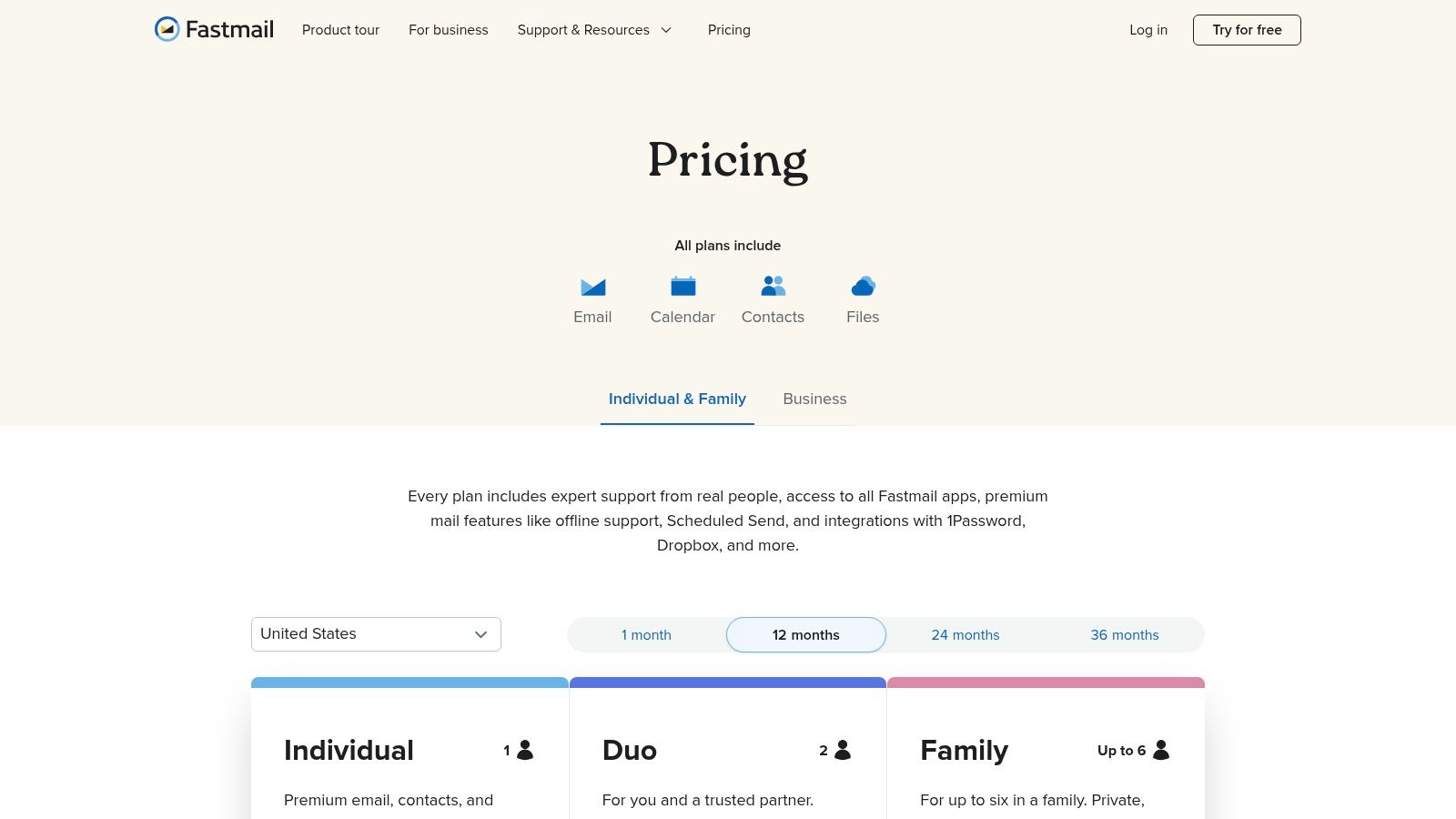
    This is exactly where privacy-first hosted email platforms like ProtonMail, Fastmail, or even Typewire come in. They offer a very compelling alternative. These services take care of all the gritty details of server management and deliverability for you. They have entire teams dedicated to maintaining pristine sender reputations, making sure your emails just work.

    Sure, you trade the absolute control of self-hosting for convenience. But in return, you get peace of mind and win back countless hours you'd otherwise spend troubleshooting. If you prioritize email privacy and email security but don't have the deep technical expertise (or the time), a secure hosted solution offers the perfect middle ground between "free" services and running everything yourself.

    Server Maintenance and Hosted Email Alternatives

    https://www.youtube.com/embed/Pn90XAGxLZ4

    Getting your mail server online is a huge win, but don't pop the champagne just yet. The real marathon begins after you’ve launched. A mail server isn’t a toaster you plug in and forget about; it’s a dynamic system that demands constant vigilance to stay secure, reliable, and out of spam folders.

    Think of it this way: you wouldn't buy a race car and then skip the oil changes, tire checks, and engine tune-ups. Your server needs that same level of routine care to perform at its peak and fend off the constant threats lurking online.

    The Never-Ending Work of a Server Admin

    Running a server is a job of many hats, and neglecting your duties is the fastest way to see your IP address blacklisted or your server compromised. It undoes all the effort you've put in so far.

    Here’s a look at the non-negotiable tasks that will become part of your regular routine:

    • Automated Backups: Your server is a single point of failure. A solid, automated backup plan for both your mailboxes and your server's configuration is your only real lifeline when hardware dies or a critical mistake takes you down.
    • Log Monitoring: Your server logs are the "check engine" light. You have to get in the habit of reviewing them for strange login attempts, bouncing emails, or other weird activity. This is often your first and only warning that an attack is underway.
    • Software Updates: This is, without a doubt, the most important job. Security holes are found all the time. Keeping your OS and every piece of mail software—Postfix, Dovecot, you name it—patched is your primary shield against new exploits.

    When you run your own mail server, you're not just an admin; you're a security professional. You are the sole guardian of your users' data, and that demands a proactive mindset, not a reactive one.

    This constant effort is more critical than ever. The economics of email have exploded, with the email marketing industry alone valued at $8.5 billion in 2021 and on track to hit nearly $18 billion by 2027. This growth fuels the need for servers that can handle high volume and strict compliance, which in turn amplifies the need for expert maintenance. You can discover more insights about email marketing statistics on dyspatch.io.

    The Honest Question: Is a Hosted Platform a Better Fit?

    Now that you see the relentless work involved, it’s time for a reality check. Do you truly have the time, the deep technical knowledge, and—most importantly—the desire to be an on-call system administrator? For a lot of people, the honest answer is no.

    And that's okay. The ultimate goal here is secure, private email, and self-hosting is just one path to get there. If the technical burden starts to eclipse the benefits of total control, it's smart to look at privacy-focused hosted email services.

    These platforms offer a fantastic middle ground. You get the key benefits of self-hosting without the headaches of day-to-day management. Companies like ProtonMail and Fastmail have built their entire reputation on providing secure, private email. They are the ones worrying about backups, security patches, server monitoring, and the incredibly complex world of email deliverability.

    You trade a little bit of custom control for a whole lot of peace of mind, knowing a team of experts is keeping your communications safe and online 24/7. For most people who value their time and want to avoid the stress of becoming a sysadmin, these hosted email platforms are an excellent alternative worth serious consideration.

    Common Questions About Self-Hosting Email

    After digging into the technical weeds of setting up a private mail server, it's natural to have some lingering practical questions. Let's tackle the most common ones I hear, which should help you decide if this path is really the right one for you.

    Just How Hard Is It to Host Your Own Mail Server?

    I won't sugarcoat it: yes, hosting your own mail server is a difficult and technically demanding job. It requires a solid grasp of server administration, networking, and, most importantly, email security. While modern open-source tools have certainly lowered the barrier to entry, this is absolutely not a project for a beginner.

    When you go it alone, you're on the hook for everything. That means the initial setup, locking down security, performing constant maintenance, applying urgent software patches, and hunting down why your emails aren't getting delivered. For anyone who doesn't have the time or the deep technical background, I almost always recommend a privacy-focused hosted email platform. It gives you the email privacy you're after without the massive administrative headache.

    What’s the Real Cost to Host a Mail Server?

    The cost to host a mail server can swing pretty widely depending on what you need. The direct expenses are easy enough to predict, but you'll quickly find that the biggest investment is your own time.

    Here’s a realistic breakdown of what you'll be paying for:

    • Server Hosting: Most people go with a Virtual Private Server (VPS). Prices can range from $5 to over $100 per month, all depending on the server's power and resources.
    • Domain Name: You have to have a custom domain, and that'll run you about $10 to $20 per year.
    • Optional Services: You might also decide to pay for a premium anti-spam filter or a more robust backup service for extra peace of mind.

    Even though the mail server software itself is usually free, the real "cost" is the countless hours you'll pour into administration, security monitoring, and ongoing maintenance.

    Can I Just Host a Mail Server at Home on a Dynamic IP?

    Technically, you could set up a mail server on your home internet connection, but this is something I strongly discourage. There are a few critical reasons why this is a bad idea, but the main one is that major email providers like Gmail and Outlook are built to block emails coming from residential, dynamic IP addresses. It's one of their first lines of defense against spam.

    The result? Your emails will almost certainly get rejected or land straight in the junk folder, making any kind of reliable communication impossible. A stable, static IP address from a reputable server provider isn't just a nice-to-have; it's a non-negotiable requirement for good email deliverability and security.

    What Happens If My Server Goes Down?

    If your mail server goes offline, the impact is immediate: you can't send or receive any new emails. Any server trying to deliver a message to your address will just get an error.

    Most sending servers will keep trying to redeliver the email for a while, usually anywhere from one to five days. But if your server is still down after that window, the email will bounce back to the sender, marked as permanently undeliverable.

    This is exactly why having solid server monitoring, automated backups, and a high-quality hosting provider are so critical. When you're running your own email, uptime isn't a luxury—it's everything.


    If you're serious about email privacy but would rather skip the complexities of server administration, Typewire offers a powerful alternative. As a secure, hosted email platform, we keep you in control of your data without the technical burden. You get an ad-free, no-tracking experience on infrastructure we own and operate ourselves.

    See how simple secure email can be with a free trial of Typewire.