Category: Uncategorized

  • How to Send Professional Email That’s Secure and Gets Noticed

    How to Send Professional Email That’s Secure and Gets Noticed

    Knowing how to send a professional email seems straightforward, right? You just need a clear subject line, a concise message, and a clean signature. But in my experience, what truly separates a good email from a great one is something many people overlook: a deep-seated commitment to email privacy and security. It's just as fundamental as proofreading.

    The Blueprint for a Truly Professional Email

    A laptop on a wooden desk, displaying an email on screen, with a notebook, pen, and pencils.

    Every single email you send is a reflection of your professional standards. While things like grammar and tone are obviously important, the technical backbone of your email—how secure and private it is—speaks volumes about your competence and respect for the recipient.

    Think about it this way: would you send a confidential business proposal from a free, ad-supported email account? You might not realise it, but that service could be scanning your message for keywords just to build an advertising profile on you and your client. This doesn't just compromise confidentiality; it sends a clear signal that data protection isn't your top priority. A truly professional approach starts with a secure foundation built on a trusted, hosted email platform.

    Core Components of a Secure Professional Email

    The structure of your email is where professionalism starts, but each part also plays a role in building trust and maintaining security. Here’s a quick breakdown of how these pieces fit together.

    Component Purpose Quick Tip
    Secure Platform Protects data, prevents snooping, and builds trust. Choose a hosted email provider with strong encryption and privacy features.
    Clear Subject Line Provides context and helps your email avoid spam filters. Be specific. Try "Project Nova Update for October 25th," not just "Update."
    Proper Salutation Sets a respectful tone for the entire conversation. It’s always safer to start formal ("Dear Mr. Smith") until you’ve built a casual rapport.
    Concise Body Delivers information efficiently and shows you respect the reader's time. Use short paragraphs and bullet points to make your message easy to scan.
    Clean Signature Provides essential contact details without introducing security risks. Avoid signatures with third-party images, as they can secretly contain tracking pixels.

    This table shows that from your subject line to your sign-off, every choice contributes to how professional—and secure—your communication is.

    The Critical Role of Your Email Platform

    I can't stress this enough: the single most important decision you'll make is your choice of email platform. Free services are tempting, but they almost always come with a hidden cost—your privacy. Many of these providers scan your emails to collect data for targeted advertising, a practice that fundamentally undermines professional trust.

    Your choice of email service is a direct reflection of your commitment to privacy and security. Using a private, hosted email platform demonstrates that you value and protect your and your clients' sensitive information.

    For any serious business or privacy-conscious professional, a hosted email platform is non-negotiable. The advantages are massive.

    • Custom Domain: An address like your.name@yourcompany.com instantly boosts your credibility and reinforces your brand. It just looks more professional.
    • Enhanced Security: Look for key features like end-to-end encryption, which ensures only you and your recipient can read the message. Robust anti-phishing protection is also a must-have.
    • Privacy by Default: The best providers actively block spy pixels and tracking scripts that are often hidden in promotional emails, protecting you from surveillance.
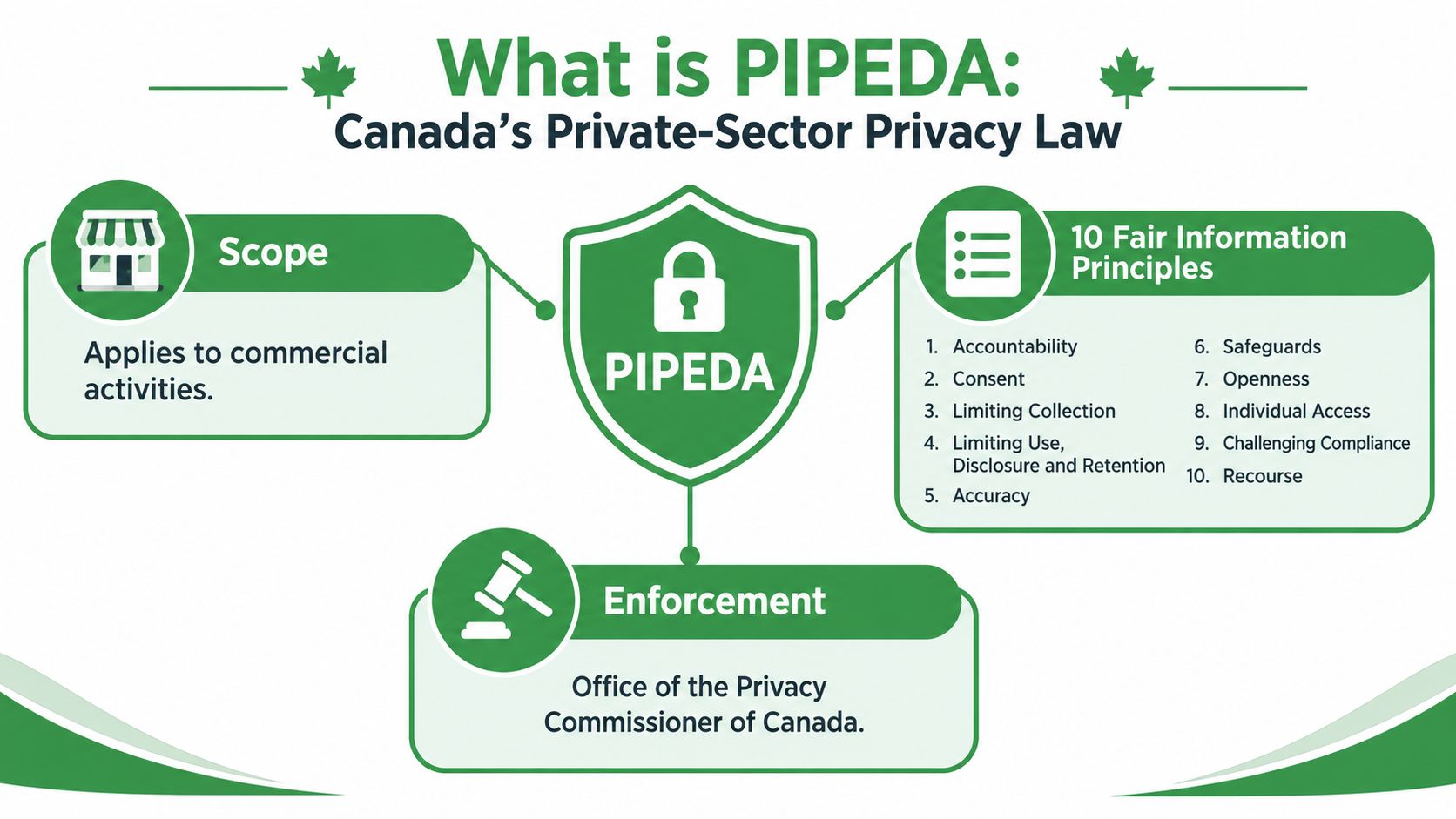
    • Data Residency: For Canadian professionals, using a service that hosts data within Canada is crucial for ensuring compliance with privacy laws like PIPEDA.

    Ultimately, sending a professional email is a holistic process. It all begins with getting a proper email address on a secure platform and carries through to every word you write. For more detailed guidance on that first crucial step, check out our guide on how to create a professional email address with a focus on security and privacy. Getting this foundation right ensures every message you send reinforces your professionalism from the ground up.

    Getting Your Message Right: Structure, Tone, and Impact

    With your secure platform ready, the focus shifts to the message itself. An email’s structure and tone are what make the difference between a response and the delete key. Knowing how to write a professional email that gets results is all about being clear, concise, and aware of who you're talking to.

    Think of it this way: every email you send is a request for someone's time and attention. A messy, rambling message doesn't just confuse the reader; it subtly signals a lack of respect for their time and can chip away at your professional credibility. Your goal should always be to make your email as easy as possible to read, understand, and act upon.

    The Core Parts of an Effective Email

    A strong email doesn't need to be complicated. In fact, the best ones follow a simple, logical flow that guides the reader from the subject line to your desired action.

    • Subject Line: This is your handshake. It needs to be specific and informative. "Question about the Q4 report" is forgettable. Try something like, "Urgent question regarding Q4 sales figures" to provide immediate context and signal priority.

    • Opening: Jump right in. Forget tired phrases like "I hope this email finds you well." A direct opening like, "I'm writing to follow up on our conversation about the project timeline," is much more effective. It respects their time and gets straight to business.

    • Body: This is the heart of your message. Keep your paragraphs short and use bullet points to make information easy to scan. If you're asking several questions, number them. This makes it much simpler for the recipient to reply to each point without missing anything.

    • Call to Action (CTA): Be specific about what you need. "Let me know your thoughts" is too vague. Instead, write something like, "Could you please review the attached document and send your feedback by Friday?" It leaves no room for guessing.

    This simple framework makes your message easy to process and even easier to act on, which dramatically increases your chances of getting a quick, helpful response.

    Matching Your Tone to Your Audience

    Writing a great professional email is about more than just its structure. You have to adapt your tone to the situation and your relationship with the person on the other end. The way you write to a new client should be different from how you write to a colleague you’ve known for years.

    Here’s how that might look in practice:

    • A Formal Inquiry: When contacting someone for the first time, stick to formal language. Start with "Dear Ms. Tremblay," keep the tone consistently respectful, and close with "Sincerely" or "Respectfully."

    • A Client Follow-Up: With a client you know well, you can relax a bit. Using their first name is probably fine, and a closing like "Best regards" feels more natural. The goal is to reflect the rapport you've already built.

    • Internal Team Emails: Communication with your own team is often the most casual, but it still needs to be professional and clear. Brevity is king here. Quick updates and action items are perfect for a bulleted list.

    The real mark of a pro is adaptability. Your tone should always be respectful, but tailoring it shows you understand the social context of your work, which helps build stronger relationships.

    If you're looking to take your writing to the next level, it's worth exploring how certain technologies can help refine your communication. While not a replacement for good judgment, some AI tools for enhancing communication can offer suggestions for making your language more precise and impactful.

    Writing for the Small Screen

    In Canada, people live on their phones. The data is clear: 64% of Canadians check their email primarily on a mobile device. This isn't just a fun fact; it should fundamentally change how you write and format your emails.

    To be effective, your message has to be optimized for a small screen.

    This means writing extremely short paragraphs—just one or two sentences each. Use plenty of white space between them to give your words room to breathe and improve readability on the go.

    Don't forget that Canadian audiences have a strong preference for brevity. A recent report found that 67% prefer short, concise emails. That said, there's an interesting exception: 28% of people don't mind a longer email if the content is highly relevant to them. It’s a good reminder that personalization can often trump length.

    Why Your Email Platform Is Your Biggest Security Asset

    We spend so much time crafting the perfect email—agonizing over the subject line and polishing every sentence. But we often overlook the most critical part of the equation: the platform we’re sending it from.

    Your email service is more than just a digital mailbox. It’s a direct reflection of your professionalism and your commitment to keeping information safe. Understanding how to send a professional email today means looking beyond just the message and seriously considering the service delivering it.

    A free, ad-supported email account might seem convenient, but it runs on a business model that treats your data as its primary product. These services are known to scan your emails for keywords to build detailed advertising profiles, a practice that just doesn't align with professional confidentiality.

    When you’re dealing with client details, strategic plans, or any sensitive personal data, the privacy guarantees of your email provider are non-negotiable. Using a free service can unintentionally expose both you and your clients to data mining, creating security holes that can quickly erode trust.

    The Problem with "Free" Email for Business

    The fundamental issue with free email providers is how they generate revenue. Since you aren't paying them directly, they have to make money somehow—and that's almost always by collecting your data for targeted ads.

    This means your private conversations, attachments, and even your contact lists are being analyzed by algorithms. For any professional, this opens the door to some serious risks:

    • Confidentiality Breaches: Sensitive details from your emails can be used to build ad profiles, creating a digital footprint you never intended to leave.
    • Perception of Unprofessionalism: Sending a business proposal from a generic free email address can signal to clients that you aren't investing in basic professional tools, which can undermine your credibility.
    • Increased Security Risks: Free platforms are huge targets for phishing campaigns. While they do have security measures, they often lack the specialized, business-grade protection you get with private platforms.

    Your email platform isn't just a tool; it's a statement about your security posture. Choosing a private, hosted solution sends a clear message that you prioritise data protection for yourself and for everyone you communicate with.

    A truly professional approach demands a platform built on a foundation of privacy, not advertising. That’s where hosted email solutions come in.

    What to Look for in a Secure Email Platform

    Switching to a private, hosted email provider is one of the single best moves you can make to secure your communications. These services operate on a completely different model where you are the customer, not the product.

    You’ll want to look for a platform that offers a strong set of privacy and security features right out of the box. Key things to watch for include zero-access encryption, which makes it impossible for even the provider to read your emails, and automatic tracker blocking to stop senders from knowing when or where you opened their message.

    This decision tree gives you a simple mental checklist to run through before you hit "send."

    Email message decision tree flowchart showing steps to determine if an email is good or needs revision.

    As the chart shows, crafting a professional message that respects the recipient's time comes down to being concise and personal.

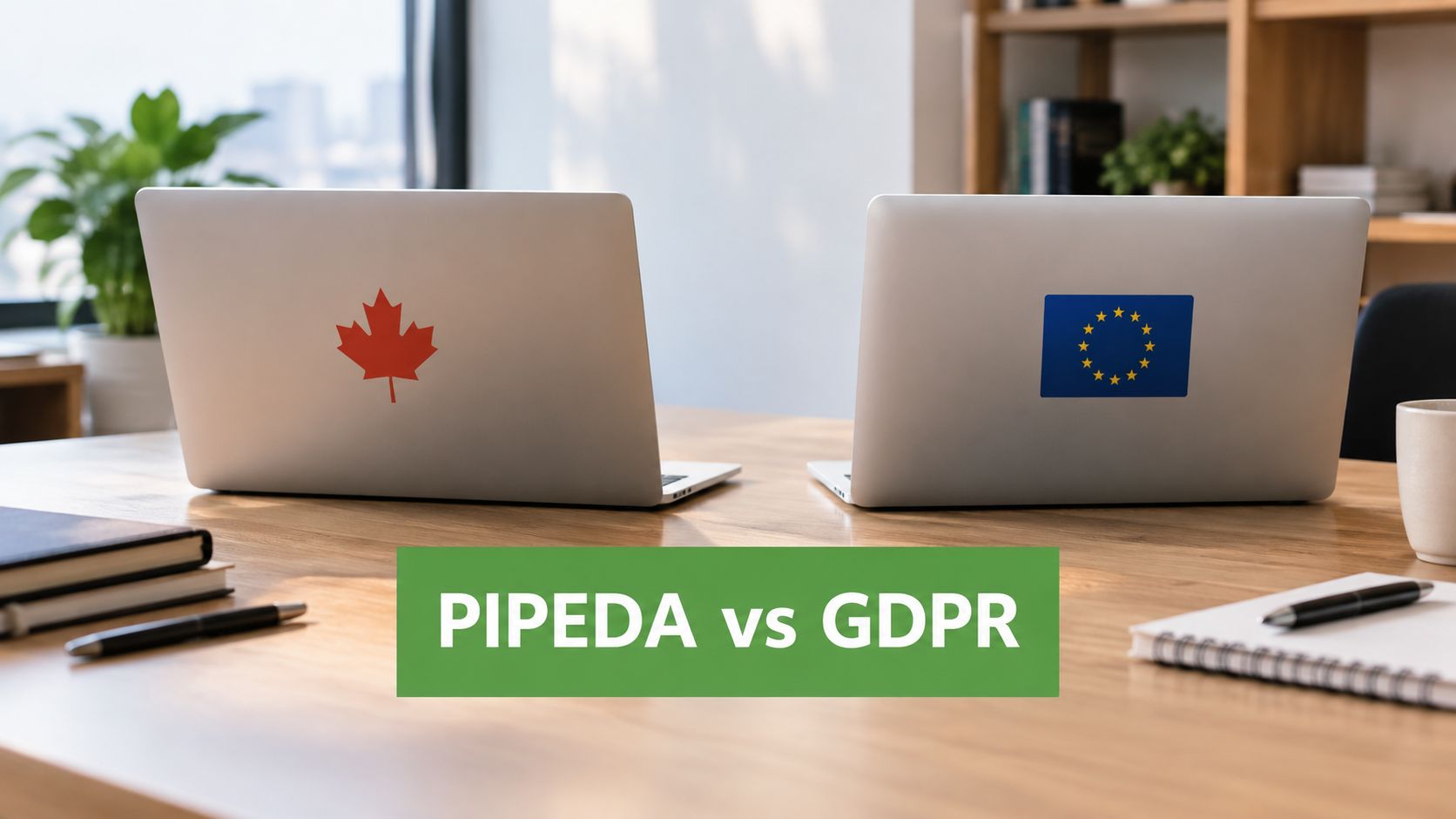
    For Canadian professionals, there's another crucial factor to consider: data residency. Using an email service that stores your data on Canadian soil is vital for complying with privacy laws like the Personal Information Protection and Electronic Documents Act (PIPEDA).

    Key Features of a Professional Email Service

    When you’re comparing your options, dig deeper than the marketing claims and look for features that show a real commitment to user security.

    • Custom Domain Support: An address like contact@yourcompany.ca is essential for building your brand and projecting professionalism. It establishes immediate credibility.
    • End-to-End Encryption (E2EE): This is the gold standard. It ensures that only the sender and the intended recipient can decrypt and read the message.
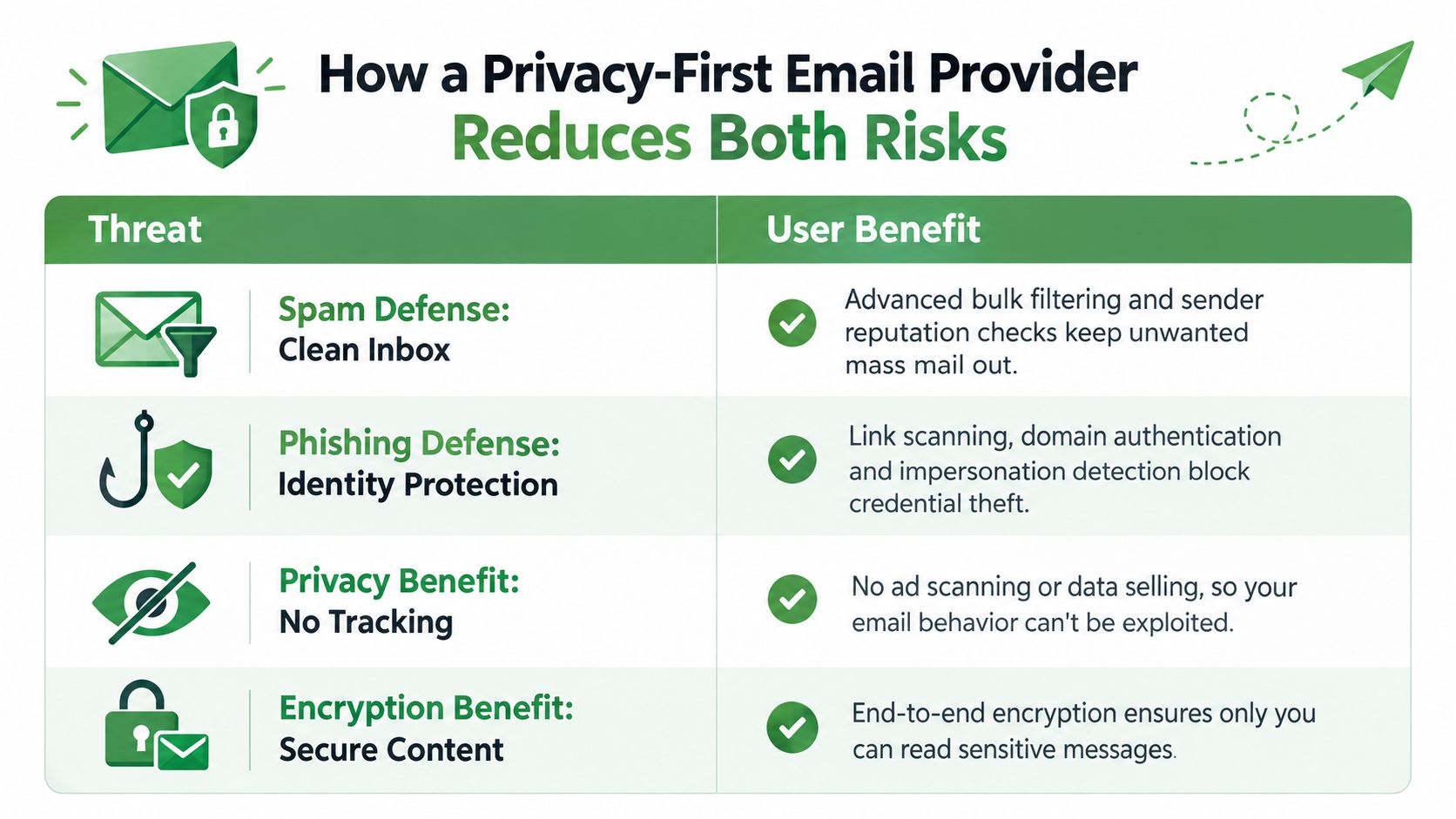
    • Robust Anti-Phishing and Spam Filters: A top-tier service will use advanced detection to spot and quarantine malicious emails before they land in your inbox, protecting you from increasingly sophisticated threats.
    • Privacy by Default: The best providers block spy pixels and other tracking methods automatically, with no need for you to dig into the settings.

    Choosing the right provider is a core part of learning how to send a professional email. To make your platform a true security asset, you need to stay on top of the latest threats and implement strong safeguards by incorporating these Top Email Security Best Practices.

    Think of your email platform as your digital office. By choosing one that respects and protects information, you demonstrate a level of professionalism that builds lasting trust with clients and colleagues. For a deeper dive, you might be interested in our complete guide to true email privacy and security to help you make an informed choice.

    Getting Attachments and Signatures Right

    Close-up of a tablet displaying a document with 'Secure Attachments', a pen, and a green notebook.

    Knowing how to write a professional email is one thing, but the small details—like how you handle attachments and signatures—are what truly set you apart. These aren't just afterthoughts. They're critical pieces of the puzzle that reflect on your professionalism, security awareness, and brand.

    Think about it: a carelessly sent file can introduce malware, while a messy or insecure signature can instantly damage your credibility. Approaching these elements with a security-first mindset is non-negotiable in today's digital world.

    A Smarter, Safer Way to Handle Attachments

    We’ve all heard the horror stories. Email attachments remain one of the top ways that viruses and malware get passed around. That’s why it’s smart to treat every file you send with a healthy dose of caution.

    Instead of automatically hitting the paperclip icon, pause and ask yourself if there’s a better way. For larger files or any document containing sensitive information, sending a secure cloud storage link is often the superior choice. Many hosted email providers offer this feature, letting you set passwords or expiration dates on your links. This gives you far more control and prevents your file from floating around in someone’s inbox forever. Plus, it keeps your email light, which helps with deliverability.

    Another pro tip is to stick with standard file formats. Whenever you can, convert documents to PDF. They are universally readable and much safer than formats like .docx or .xlsx, which can contain malicious scripts.

    Don’t forget to mention the attachment in the body of your email. A simple sentence like, "I've attached the latest project brief for your feedback," does two things: it provides context and reassures your recipient that the file is intentional, not a phishing attempt.

    This tiny step is a massive trust signal and can be the difference between your email being read or getting flagged by an aggressive spam filter.

    Crafting a Clean and Private Signature

    Your email signature is your digital business card, but it can also be a hidden privacy risk. Many people don't realise that third-party signature generators often embed invisible tracking pixels. These pixels can report back when, where, and how many times an email has been opened.

    For a truly professional—and private—signature, build it yourself directly within your email client’s settings. Use plain text and, if you must have a logo, make sure it’s a single image you host yourself. This completely sidesteps any sneaky third-party code.

    A solid signature needs only the essentials:

    • Your Full Name: Who you are.
    • Your Title and Company: What you do and where.
    • A Phone Number: How to reach you directly.
    • Your Website or LinkedIn Profile: A place for them to learn more.

    The goal is clarity, not clutter. Leave out the inspirational quotes and long lists of social media links. You want to provide key contact info without creating a distraction or a security hole. If you're looking to refine yours, check out these email signature best practices to ensure it strengthens your professional image.

    Your Pre-Send Checklist and Follow-Up Strategy

    Hands holding a checklist with red checkmarks, next to a laptop and smartphone.

    We’ve all felt that split-second of hesitation just before our cursor hovers over the "Send" button. This is your most critical moment—the final pause that separates a polished, professional message from a sloppy, regrettable one.

    Learning to use this moment for a quick but thorough review is one of the best habits you can develop. It’s not just about catching a stray typo. It's a strategic checkpoint to ensure your email is clear, correct, and respects the recipient’s time and privacy. A rushed email can easily cause confusion or, far worse, accidentally send sensitive information to the wrong person.

    Your Pre-Send Professional Email Checklist

    Before any email leaves your outbox, it's wise to run it through a final inspection. This simple habit prevents the kind of common errors that can instantly damage your credibility. To make it easy, I've put together a checklist you can mentally run through every single time.

    Check Area What to Verify Why It Matters
    Recipients Double-check every address in "To," "Cc," and "Bcc." Autocomplete is notorious for suggesting the wrong contact. Sending a confidential file or private conversation to the wrong person is a serious security breach and a major professional blunder.
    Subject Line Does it accurately and concisely describe the email's content? A vague or misleading subject line gets your email ignored, deleted, or flagged as spam. A clear subject respects the recipient’s time and helps them prioritise.
    Attachments Did you actually attach the file you mentioned? Is it the correct version? Forgetting an attachment is one of the most common email mistakes. It looks unprofessional and creates unnecessary back-and-forth communication.
    Tone & Clarity Read the email aloud. Does it sound like you? Is the tone appropriate? Text can easily be misinterpreted. Reading it out loud helps you catch awkward phrasing and ensure your tone comes across as intended—whether it's helpful, firm, or friendly.
    Links Click every link to ensure it goes to the correct destination and isn't broken. A broken link is frustrating for the recipient and makes your message look sloppy. It forces them to do extra work, which is never a good look.
    Proofreading Check for spelling, grammar, and punctuation errors. Simple mistakes can make you seem careless or uneducated. A clean, error-free email signals professionalism and attention to detail.

    Making this checklist a reflex is the last line of defence against simple mistakes that can have surprisingly big consequences.

    A professional email isn't just about what you say, but also how carefully you send it. A final check for accuracy and security is the last line of defence against simple mistakes that can have major consequences.

    This level of diligence is especially important given how central email is to Canadian business. It's not just a tool; it's a primary communication channel. An incredible 83% of Canadian companies use email to connect with customers. For small and medium-sized businesses, this reliance is even more pronounced, with 64% citing email marketing as their main driver for customer acquisition and retention. You can dive deeper into these email marketing statistics for Canada to see just how prevalent it is. With this much business riding on email, every message counts.

    The Art of the Professional Follow-Up

    So, you’ve sent your perfectly crafted email… and heard nothing back. Silence. What now? Sending a follow-up requires a delicate touch. The goal is to be persistent without being a pest.

    First off, be patient. Inboxes are battlegrounds, and people are busy. A good rule of thumb is to wait 3-5 business days before sending a polite nudge. Following up too soon can feel demanding and might work against you.

    When you do decide to follow up, keep it short, sweet, and helpful. Always reply to your original message; this keeps the entire context in a single thread and saves the recipient from having to search for your first email.

    A simple and effective follow-up might look something like this:

    "Hi [Name], just wanted to gently follow up on my previous email. Is there any additional information I can provide from my end?"

    This approach works because it's polite, professional, and non-accusatory. It’s a gentle reminder that also offers help, which is often all it takes to get a response. Remember, you're trying to continue a conversation, not demand a reply. Mastering this balance shows you respect their time while still advocating for your own needs.

    Frequently Asked Questions About Professional and Secure Email

    Even when you feel you've mastered the basics of writing a great professional email, certain situations can still make you pause. It’s those tricky, in-between moments that often leave you wondering about the right move. Let's tackle some of the most common questions we hear, with a special focus on modern etiquette and keeping your communications private.

    Is It Ever Appropriate to Use Emojis or Exclamation Points?

    This is a classic "it depends" scenario, but the smartest approach is to always start with caution. When you’re emailing a new contact for the first time, it's best to skip the emojis altogether. Your immediate goal is to establish a baseline of professionalism.

    Once you’ve built up some rapport and notice them using emojis or a more casual tone, you can then start to mirror their style. A single, well-placed exclamation point can show genuine enthusiasm, but peppering your emails with them can quickly come across as unprofessional or frantic.

    Here’s a good rule of thumb I always follow:

    • Formal Communication: For things like job applications, legal matters, or initial client proposals, never use emojis. Be extremely sparing with exclamation points—if you use them at all.
    • Informal Communication: With colleagues you know well or clients you have a friendly relationship with, a tasteful emoji can add a bit of warmth and personality.

    When in doubt, leave it out. You’ll never get it wrong by being too professional, but you can easily make a poor impression by being too casual. A professional tone is always your safest bet.

    How Do I Choose a Secure Email Provider for My Business?

    Choosing your email provider is a foundational business decision, one that speaks volumes about your approach to security and professionalism. My strong advice is to steer clear of free, ad-supported services for business. Their entire model often depends on scanning your data, which is a risk you shouldn't take. Instead, prioritise a provider built from the ground up for privacy.

    When you're comparing services, look for these non-negotiable features:

    • Zero-Access Encryption: This is critical. It ensures that not even the provider can read your emails, keeping your business conversations truly confidential.
    • Canadian Data Residency: For any business operating in Canada, using a service that hosts your data within the country is crucial for complying with privacy laws like PIPEDA.
    • Custom Domain Support: An email address like you@yourcompany.ca is an absolute must. It’s a core part of your brand's credibility.
    • Default Tracker Blocking: The best privacy-focused services automatically block spy pixels and other hidden trackers in emails. This protects you from surveillance without you having to lift a finger.
    • Robust Phishing and Spam Protection: You need a service with advanced, intelligent filtering that can spot and isolate threats before they ever land in your inbox.

    A secure email platform is more than just a tool; it shows your clients and partners that you take data protection seriously—both for your own business and for them.

    What Is the Best Way to Handle a Mistake After Sending an Email?

    We've all been there. You hit "send" and immediately spot a mistake. The first thing to do is take a breath and calmly assess how serious the error is. Your response should be proportional to the mistake.

    For minor things like a small typo or a grammatical slip-up, the best course of action is often to do nothing at all. Sending another email just to point it out can be more distracting than the original mistake. Most people will simply read past it without a second thought.

    However, if the mistake is significant, you need to act quickly.

    • Wrong Information: If you sent an incorrect date, price, or name, send a brief correction email right away.
    • Wrong Attachment: Sent the wrong document? Fire off a new email with the correct file attached.
    • Wrong Recipient: This is a tricky one. If you've sent a sensitive email to the wrong person, a recall feature might work, but it's notoriously unreliable. Your best move is to send a polite follow-up to that person, asking them to delete the email unread, and then inform the intended recipient about what happened.

    When sending a correction, use a clear subject line like "Correction: [Original Subject]" or "Updated Information: [Original Subject]." In the body, just state the correction clearly and concisely. For example: "My apologies, the meeting is scheduled for 2:00 PM, not 3:00 PM as I previously stated. Sorry for any confusion."

    A quick, professional correction shows you're accountable and on top of things, which can actually end up building more trust.

    When Should I Use Reply All Instead of Reply?

    Ah, the "Reply All" button—a powerful tool that, when misused, becomes the number one cause of cluttered inboxes and annoyed colleagues. Before your cursor even gets near it, ask yourself one simple question: "Does every single person on this email chain need to know what I'm about to say?"

    If the answer isn't a clear "yes," then just use "Reply."

    Reserve "Reply All" for these specific situations:

    • Group Decisions: When your input is required for a decision that involves everyone on the thread.
    • Project Updates: When you're sharing a status update that all stakeholders need to see to stay aligned.
    • Scheduling: When coordinating a meeting time with multiple people, so everyone is aware of who is available and when.

    Definitely avoid "Reply All" for simple confirmations like "Thanks!" or "Got it." And if your response only concerns the original sender, a simple "Reply" is all you need. Being thoughtful here shows you respect everyone's time and attention.


    Ready to elevate your email communications with a focus on security and privacy? Typewire is a Canadian private email provider that puts you in control. With zero-access encryption, default tracker blocking, and support for custom domains, we provide the tools you need to send truly professional and secure emails. Start your free trial today.

  • Your Guide to Stopping Email Sign Up Spam for Good

    Your Guide to Stopping Email Sign Up Spam for Good

    It's a frustrating, all-too-common scenario. You open your inbox, expecting the usual messages, but instead, you’re met with a sudden, overwhelming flood of confirmation emails from websites you’ve never even heard of. This isn't just a random annoyance; it's a specific tactic called email sign-up spam.

    In short, malicious bots have gotten ahold of your email address and are using it to sign you up for countless newsletters and services without your permission. The result is a chaotic inbox that buries your important messages and compromises your email privacy and security.

    Why Your Inbox Is Suddenly Full of Spam

    A laptop on a wooden desk displays 'SPam Surge' with various email icons, symbolizing an increase in spam.

    Waking up to an inbox overflowing with hundreds of subscription confirmations is a jarring experience. This is what's known as an "email bomb" or sign-up spam attack, and it's far more than just aggressive marketing—it's a deliberate assault on your email account and a serious email security threat.

    Automated scripts take your email and run it through thousands of sign-up forms across the internet. This unleashes a relentless wave of automated emails, making your inbox practically unusable. Attackers do this for a few specific, malicious reasons that directly impact your email privacy.

    The Motives Behind Email Sign-Up Spam

    Understanding why attackers launch these campaigns is the first step toward building a better defence. Their goals always undermine your email security.

    • Creating a Distraction: This is the most common reason. By flooding your inbox, attackers create a smokescreen to hide a much more important email. They're hoping a critical security alert—like a password reset notification or a fraudulent purchase receipt—gets lost in the noise while they compromise one of your other accounts.

    • Plain Old Harassment: Sometimes, an email bomb is simply a form of digital harassment. The goal is to make someone's primary communication channel so cluttered that it becomes useless, disrupting their personal or professional life.

    • Damaging a Server's Reputation: In targeted attacks, a bad actor might sign up a company's employees to spam lists en masse. The objective here is to get the company's own email server blacklisted by spam filters, causing widespread delivery issues.

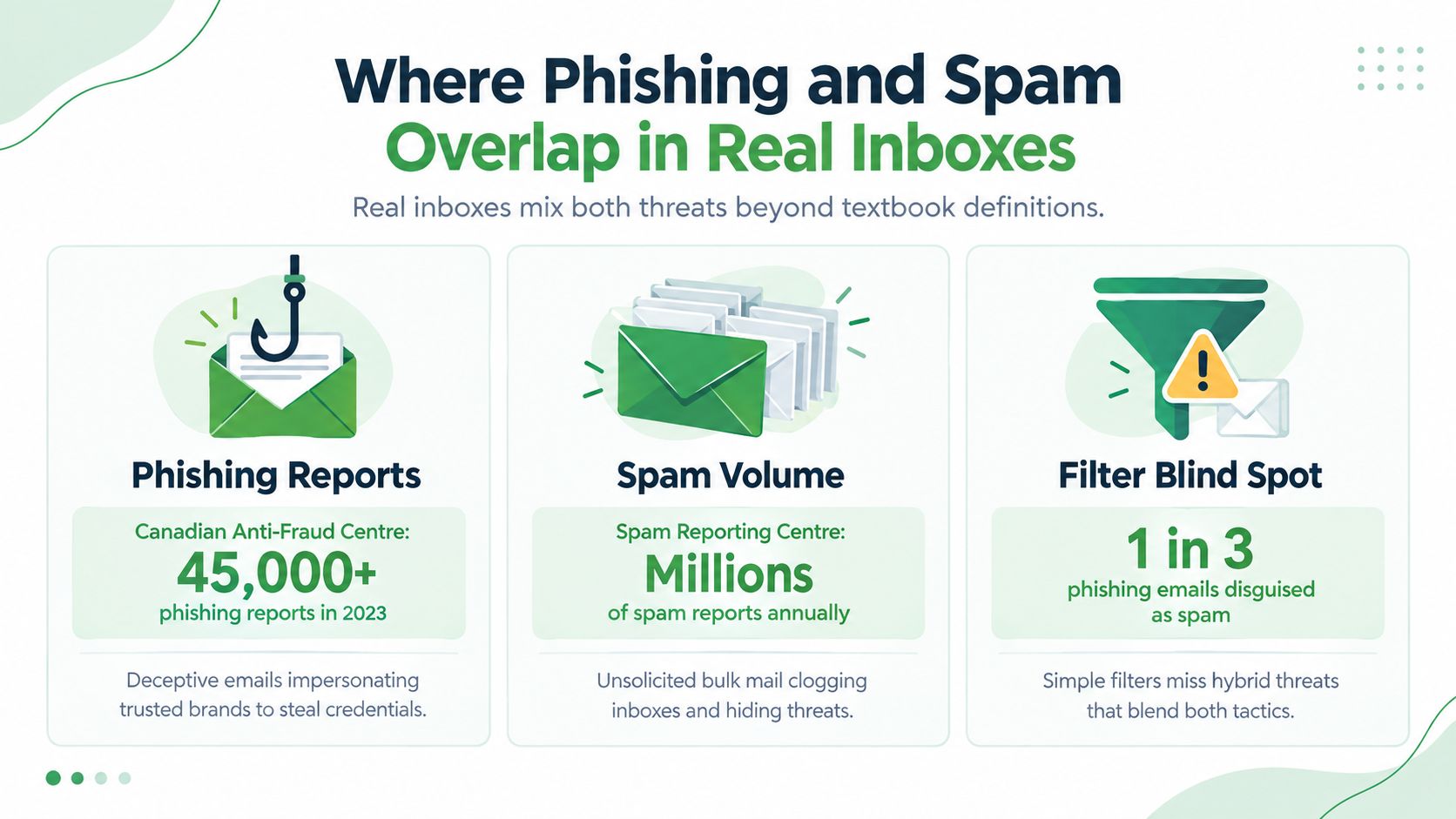
    This isn't just a fringe problem; it’s a massive global issue. Canada, for instance, is one of the top ten spam-producing countries worldwide, with an estimated 6.9 billion spam messages sent from Canadian sources every single day. The scope of the problem is clear—between October 2024 and March 2025, Canada's Spam Reporting Centre received over 208,083 complaints.

    Key Takeaway: Email sign-up spam is rarely a random event. It's a calculated attack designed to distract you from a more serious security breach, which is why strong email security and privacy habits are so vital.

    Phishing Hiding in Plain Sight

    There's an even more sinister version of this attack that blends in phishing attempts. Hidden among the flood of legitimate (but unwanted) confirmation emails are expertly faked messages designed to look like genuine security alerts.

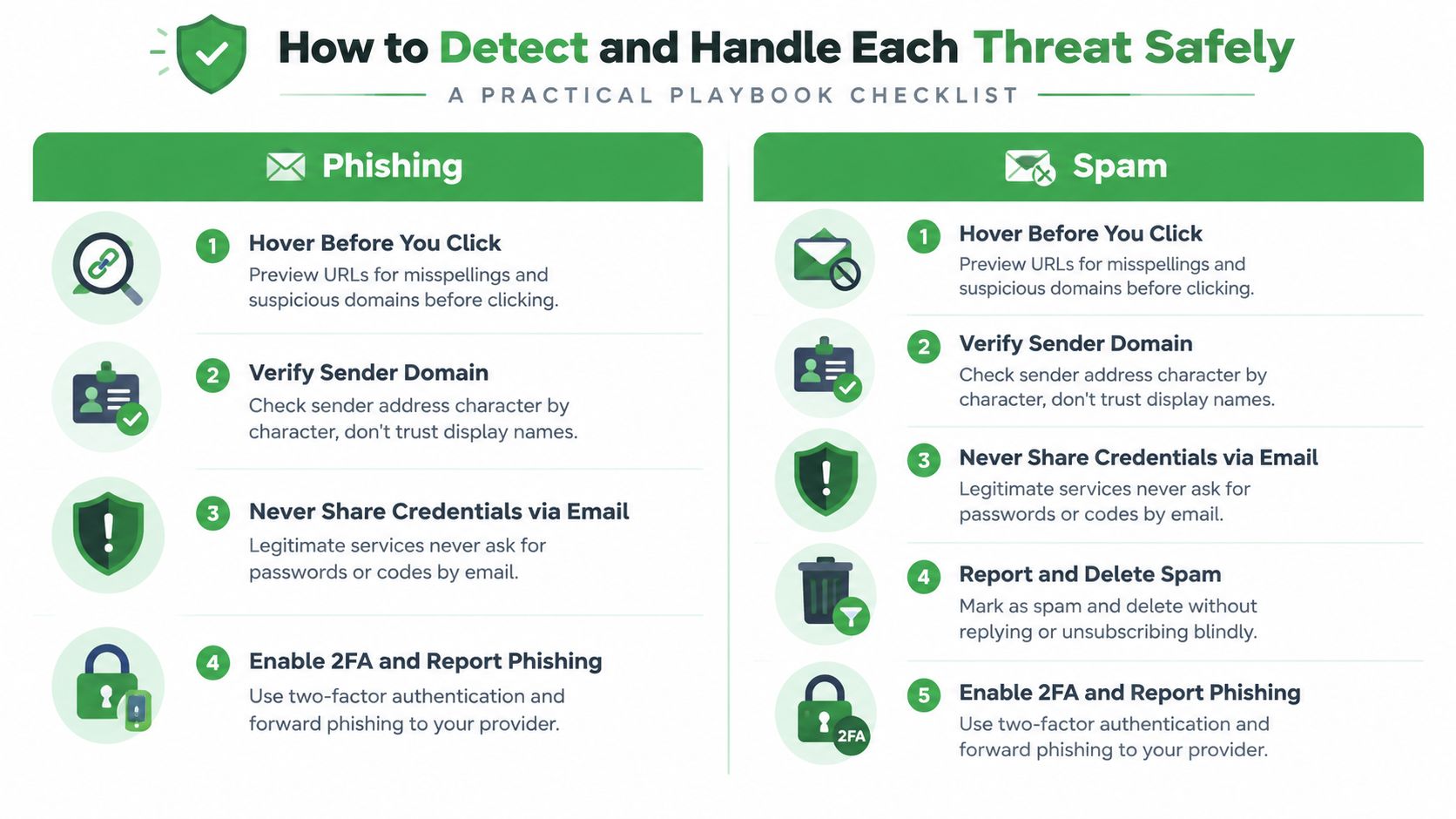
    These phishing emails might imitate your bank, a social media site, or an e-commerce platform, trying to panic you into clicking a malicious link and handing over your login credentials. This is a direct assault on your email security.

    For a deeper look at keeping your inbox safe from these kinds of threats, check out our guide on email security and privacy. Ultimately, a secure, hosted email platform is your strongest line of defence, giving you tools that actively filter out spam and catch phishing attempts before they ever hit your inbox.

    Building Your First Line of Defence

    A person uses a smartphone and laptop at a desk, with the text 'Protect Your Email'.

    The best way to deal with sign-up spam is to stop it before it even starts. Instead of constantly fighting a losing battle against a cluttered inbox, a few proactive habits can shield your primary email address from junk mail and more serious security threats. It all boils down to treating your main email address like the valuable asset it is—not something you hand out to every website that asks.

    A solid defence begins with compartmentalising your digital life. Think of it like this: you have a key for your house, a key for your car, and a key for your office. You wouldn't use your house key for everything, and that same logic should apply to your email. By creating barriers between your most important communications and the wild west of the internet, you immediately shrink your attack surface and enhance your email privacy.

    Use Aliases as Your Digital Decoys

    One of the slickest features of hosted email platforms like Typewire is the ability to create email aliases. An alias is simply a unique, forwardable email address that funnels messages to your real inbox without ever exposing your primary address. For example, you could spin up an alias like netflix.username@typewire.com to use exclusively for your Netflix account.

    Now, if that specific alias starts getting bombarded with spam, you have your culprit. You know exactly which service either got breached or sold your data. The best part? You can just delete that one alias, and the spam stops instantly. Your main account and all your other services are completely unaffected.

    Aliases are a game-changer for email privacy. They let you pinpoint the source of a leak and shut it down with surgical precision. If an alias gets compromised, you've only lost a disposable address, not control of your entire inbox.

    When to Go Fully Disposable

    Aliases are fantastic for services you trust and plan to use for the long haul, but some situations call for a more scorched-earth approach. This is where disposable email addresses come in. They are perfect for those one-and-done sign-ups where you need to verify an email but have zero intention of ever hearing from that service again.

    Here are a few classic scenarios where a disposable address is your best friend:

    • Downloading a "free" e-book: Grab the download link without surrendering your real email to yet another marketing list.
    • Joining a one-time webinar: Get access without signing up for a lifetime of follow-up promotions.
    • Price-checking on a sketchy e-commerce site: Satisfy your curiosity without getting hammered with sales alerts forever.

    Using this tactic keeps your primary inbox clean and, more importantly, keeps your address off the lists of data brokers who scrape sign-up forms for new targets, safeguarding your email privacy.

    Scrutinize Privacy Policies Before You Click

    Finally, get into the habit of giving a site's privacy policy a quick once-over before you hand over any email, even an alias. You don't need to read every line of legalese. Just pop open your browser's search function (Ctrl+F or Cmd+F) and look for a few tell-tale keywords.

    Red Flags to Search For:

    • "Share with partners"
    • "Third-party marketing"
    • "Sell your data"
    • "Affiliates"

    If a company is upfront about sharing or selling your data to a nebulous list of "partners," that's your cue to back away slowly. They're telling you straight up that your email privacy isn't safe with them. Protecting your inbox often comes down to these small, consistent checks. When you combine aliases, disposable addresses, and quick privacy scans, you build a powerful defence that dramatically cuts down on your exposure to sign-up spam.

    Advanced Techniques for Inbox Management

    Even with a solid defensive strategy, some sign-up spam is bound to slip through the cracks. That’s when you need to shift from pure prevention to active inbox management. By getting good with filters and learning to spot genuine threats, you can keep your main inbox clean and maintain your email security.

    Most email clients today have some pretty powerful tools for creating rules that automatically sort, file, or even delete messages before they ever hit your inbox. This goes way beyond just dumping things into a junk folder; it’s about building a smart system that works for you. If you're using a privacy-focused hosted email platform, you'll likely find even more fine-grained control over these settings.

    Creating Powerful Inbox Filters

    Think of filters as your own personal bouncers for your inbox. They check every incoming message against a list of instructions you’ve given them.

    Here's a simple but incredibly effective rule I use all the time: automatically trash any email sent to a specific alias that also contains the word "unsubscribe." For instance, say you used shopify.user@yourdomain.com for an e-commerce site. A filter that deletes messages sent to this address containing "unsubscribe" will catch nearly all the marketing fluff from that source without ever bothering your primary inbox.

    An even smarter filter targets the confirmation spam itself. You can set up a rule to automatically delete any email with phrases like "confirm your subscription," "verify your email," or "complete your registration" unless the sender is already in your contact list. This one rule can wipe out 90% of sign-up spam right there.

    Spotting Sophisticated Phishing Attacks

    The real danger with email sign-up spam is how it can be used as a smokescreen for more serious threats like phishing. Attackers will flood your inbox with junk, hoping you’ll let your guard down and miss the one malicious email hidden in the noise. Phishing has become a major email security issue in Canada; in fact, recent studies found that 38% of Canadian adults received a phishing email in just the last three years, with people aged 35 and over being the most common targets. You can find more details on this growing problem by reading the full research on Canadian phishing trends.

    These attacks almost always try to create a false sense of urgency. Keep an eye out for subject lines like:

    • "Action Required: Your Account is Suspended"
    • "Unusual Sign-in Attempt Detected"
    • "Your Order Has Been Cancelled"

    Always, always hover over links before you click to see the real destination URL. The email might look like it's from your bank, but the link could lead to a misspelled or completely unrelated domain. This is where a secure hosted email platform with built-in phishing detection really shines, as it can automatically flag suspicious links and spoofed sender addresses for you.

    For a complete rundown of what to look for, check out our guide on the top email spam filters to protect your inbox. Combining smart, custom filters with a vigilant eye for phishing red flags is ultimately your most powerful strategy for managing whatever gets through.

    How Website Owners Can Stop Sign Up Spam

    If you run a website, you’re on the front lines of the battle against sign-up spam. It's not just a technical headache; it’s a responsibility. Every time a bot exploits your sign-up form to bombard someone's inbox, it's a mark against your brand and an abuse of their email privacy.

    Think about it from the user's perspective. An inbox full of unwanted confirmation emails from your site screams "insecure." This erosion of trust isn't just a perception problem. It can tank your email deliverability, sending your legitimate marketing messages straight to the junk folder. Let's dig into how you can lock down your forms.

    Implement Double Opt-In as Your First Line of Defence

    The single most powerful tool in your arsenal is the double opt-in. It's a simple idea: after a user signs up, they must click a confirmation link sent to their email address to activate their subscription.

    A bot can mindlessly fill out a form, but it can’t open an email and click a link. That one extra step is your proof of life—it confirms a real, engaged person is behind the sign-up. This not only improves email security but also cleans your list, ensuring it's filled with people who actually want to hear from you.

    Use CAPTCHA and Honeypots to Outsmart Bots

    While double opt-in confirms the user, you also want to stop bots from submitting your forms in the first place. This is where a couple of clever techniques come into play: CAPTCHA and honeypots.

    • CAPTCHA: Forget those annoying "find the traffic lights" puzzles. Modern tools like Google's reCAPTCHA v3 work silently in the background. They analyse user behaviour to tell humans and bots apart without disrupting the user experience.
    • Honeypots: This is my favourite trick. A honeypot is a hidden form field that humans can't see, but bots, which are programmed to fill everything, can. If your server gets a submission with that hidden field filled in, you know it's a bot. Just discard it.

    Layering these methods creates a robust defence. CAPTCHA is the gatekeeper, the honeypot is the hidden trap, and the double opt-in is the final handshake confirming a real subscriber.

    This infographic shows a simple decision process for an email recipient, but it’s a great mental model for how your security should work automatically.

    Diagram of an email threat decision tree, evaluating sender recognition for safety or blocking.

    The key takeaway here is sender verification, which is exactly what a double opt-in system provides on your behalf, boosting your site's security posture.

    Comparing Website Anti-Spam Techniques

    With several methods available, it's helpful to see how they stack up. This table breaks down the most common techniques for securing your sign-up forms.

    Technique Primary Goal User Experience Impact Effectiveness Against Bots
    Double Opt-In Verify email ownership & intent Adds one extra step for users Very High – a crucial final check.
    CAPTCHA (v3) Differentiate humans from bots Minimal/Invisible High – effective against many automated scripts.
    Honeypot Fields Trick bots into self-identifying None for human users Moderate to High – clever and user-friendly.
    Rate Limiting Block high-volume attacks None, unless a real user submits too fast High against brute-force/bombing attacks.

    No single solution is a silver bullet. The best defence comes from combining a few of these, like a honeypot paired with a double opt-in, to create a system that’s both effective and user-friendly.

    Advanced Spam Prevention Methods

    For sites dealing with relentless bot attacks, you might need to bring in heavier-duty strategies. Rate limiting is a fantastic one. It automatically blocks any single IP address from submitting your form too many times in a short window. This stops the kind of rapid-fire attacks used in email bombs dead in their tracks.

    These measures aren't just for you; they contribute to a healthier, safer internet for everyone. If you're looking for a deep dive, comprehensive spam protection documentation can offer more granular advice. At the end of the day, securing your forms protects your reputation, ensures your messages reach real customers, and shows respect for every user's email security.

    Choosing an Email Platform for Maximum Privacy

    A golden padlock and a brown envelope placed on a laptop keyboard, signifying private email.

    All the defensive tactics in the world—aliases, filters, and careful vetting—are so much more effective when your email provider is actually on your side. Think about it: the tools you use matter. Many "free" email services aren't really free; their business model is built on scanning your communications to build advertising profiles. In that equation, your email privacy and security always come second.

    To really get a handle on sign-up spam and lock down your digital life, you need a hosted email platform built from the ground up with security and user control in mind. This means picking a service that works for you, not for advertisers. A private, hosted email platform is your best line of defence.

    The Benefits of a Secure Email Service

    When you switch to a dedicated privacy-focused email provider, you get a whole suite of features designed to protect you. These aren't just tacked on as afterthoughts; they're baked into the core of the service.

    • Zero-Access Encryption: This is a big one. It means your data is encrypted in such a way that not even the provider can read it. Your email privacy is absolute, and communications stay safe from prying eyes.
    • Built-in Spy Pixel Blocking: You know those invisible trackers in marketing emails that report back when and where you opened a message? A secure service blocks these automatically, protecting your location and online habits without you lifting a finger.
    • Canadian Data Residency: For those of us in Canada, choosing a provider that keeps data within the country is a huge plus. It ensures your information is protected by Canadian privacy laws like PIPEDA.

    A private, hosted email platform fundamentally changes the dynamic. Instead of being the product, you become the customer. This alignment ensures your interests—email privacy, security, and a clean inbox—are the top priority.

    A Complete Toolkit for Email Control

    A truly secure platform doesn't just stop at privacy; it integrates powerful spam detection with features that give you total control. Smart anti-spam and phishing algorithms catch threats before they ever hit your inbox, while tools like email aliases let you manage your online identity without ever revealing your main address.

    And if you’re a website owner, remember that your responsibility extends to protecting your users and your platform. A great starting point is to brush up on WordPress security best practices to safeguard your site from spam bots and shady sign-ups.

    This all-in-one approach is the most effective way to deal with the relentless threat of email sign-up spam. When you invest in an email service that puts your privacy first, you're not just getting an inbox—you're getting a complete toolkit to secure your digital life. If you're ready to make a change, you can explore some of the top secure alternatives to Gmail that give you back control.

    Still Have Questions About Sign-Up Spam?

    Even with the best defences in place, dealing with the aftermath of a sign-up spam attack can leave you with some lingering questions about email security and privacy. Let's walk through some of the most common ones.

    What’s the Best Way to Clean Up My Inbox After an Attack?

    The most important thing to do first is stay calm and avoid clicking anything. Attackers love to use the chaos of a spam bomb to sneak in a legitimate-looking phishing email, hoping you'll click on it by mistake. This is a critical moment for your email security.

    Instead, put your email client's search function to work. Look for common phrases like "confirm your email," "welcome to," or "verify your account." You can then select all these messages at once and delete them in a single go.

    This is also the perfect time to set up a temporary filter. Create a rule that automatically sends any new message containing "confirm your subscription" or similar phrases straight to a separate folder (or even directly to the trash). This will keep the flood from overwhelming your primary inbox while you deal with the situation.

    Is Email Sign-Up Spam Actually Illegal in Canada?

    In short, yes. Canada's Anti-Spam Legislation (CASL) makes it illegal to send commercial electronic messages without the recipient's consent. The problem is, enforcing this against sign-up bots is a real challenge from an email security perspective.

    These attacks are almost always launched from servers scattered across the globe, making it nearly impossible to pinpoint the person responsible. Plus, the real goal isn't to sell you something; it's to create a massive distraction. The spam itself violates CASL, but the more serious crime is usually the account theft or fraud the spam is designed to hide.

    The real power isn’t in legal action after the fact, but in proactive defence. Using a secure, hosted email platform with strong spam filtering is your best shield, as it stops the majority of these attacks before they can disrupt your inbox or compromise your email security.

    Can a Hosted Email Platform Genuinely Stop All Spam?

    Let's be realistic: no single tool can promise to block 100% of spam forever. But a private, hosted email platform gives you the strongest possible defence. Unlike free email services that often scan your data for their own purposes, these platforms are built from the ground up to protect your privacy and security.

    They achieve this by layering multiple defences:

    • Advanced Heuristics: These are smart algorithms that do more than just check a blocklist. They analyse message patterns, sender reputation, and thousands of other tiny signals to identify and stop spam campaigns before you ever see them.
    • Zero-Access Encryption: This is a crucial email security feature. It means not even the email provider can read your emails, keeping your private conversations safe from data breaches or internal snooping.
    • Built-in Alias and Filtering Tools: The best platforms empower you directly. They give you the tools to create aliases for different services and set up powerful rules to manage exactly what lands in your inbox, all on your own terms.

    When you choose a hosted email platform that puts your security first, you aren't just getting a spam filter; you're getting a complete system designed to keep unwanted mail and malicious threats out.


    Ready to take back control of your inbox with an email service built for privacy? Typewire offers zero-access encryption, powerful spam filtering, and all the tools you need to stop email sign up spam for good. Start your free 7-day trial of Typewire today.